
Why Is My Interior Paint Still Sticky? You’re Not Alone in Virginia Beach, Norfolk, Chesapeake, and Suffolk
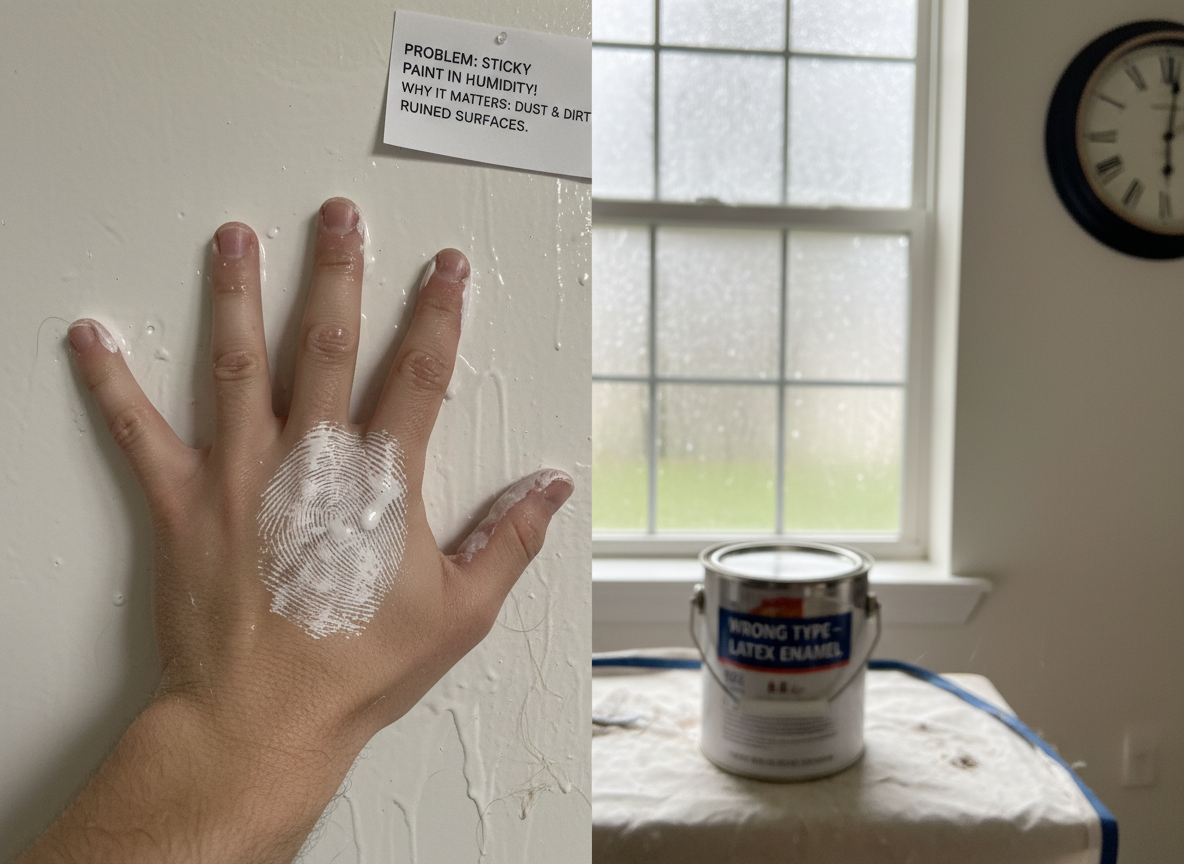
You finally finish painting, step back to admire the room and days later the walls still feel tacky. If your interior paint is still sticky after a week, you’re not the only Virginia homeowner dealing with it.
At Showstopper Painting, we’ve painted thousands of homes across Virginia Beach, Norfolk, Chesapeake, and Suffolk. Sticky paint is one of the most common “what went wrong?” calls we get especially with our coastal humidity, older housing stock in some neighborhoods, and the way our weather can swing from dry to muggy overnight. The good news: it’s almost always fixable once you know the real cause.
This guide breaks down what sticky paint really means, the mistakes we see most often in Virginia homes, and what you can do to get a smooth, durable finish that doesn’t grab dust, fingerprints, or lint.
The Problem: Why Paint Won’t Dry (and Why It Matters)
Sticky paint isn’t just a minor annoyance, it can turn into a long-term durability problem. When paint stays tacky, it’s more likely to:
- Collect dust and pet hair (especially in high-traffic rooms)
- Show fingerprints and smudges every time someone brushes the wall
- Scuff easily when furniture bumps it
- Peel or “gum up” when you try to clean it
A lot of homeowners assume it’s simply “bad paint” or “Virginia weather,” but in most cases it’s a process issue: surface prep, product choice, coat thickness, airflow, and timing.
It also helps to know the difference between drying and curing. Drying is when the surface is no longer wet. Curing is when the paint film hardens all the way through. In humid conditions, paint can feel dry but still be soft underneath, so it stays tacky longer and is easier to damage.
If it’s still sticky after a week, something in the prep or application is slowing down curing, or the room conditions are keeping moisture trapped in the paint film.
7 Common Mistakes That Leave Walls Sticky (Virginia Edition)
1) Skipping surface prep
If the wall has grease, dust, residue, or chalky old paint, the new coat can struggle to bond and cure properly. We see this a lot in older Norfolk homes especially kitchens, hallways, and anywhere hands touch the wall often.
Even “invisible” contamination matters. Cooking oils, aerosol sprays, and some household cleaners can leave a film that paint doesn’t love. When prep is skipped, the paint may dry unevenly, stay soft, or peel later.
2) Painting in high humidity
Virginia Beach summers can feel like a steam room. When the air is already saturated with moisture, paint dries slower and cures softer. Even “dry to the touch” paint may stay tacky underneath longer than expected.
Humidity also changes your timeline. A project that seems like a quick weekend job can turn into a week of waiting if the room stays closed up and damp.
3) Using the wrong paint for the room
Bathrooms, laundry rooms, and kitchens need moisture-resistant formulas. We’ve seen sticky walls happen when standard interior latex is used in high-moisture spaces especially in Chesapeake homes where bathrooms don’t always have strong ventilation.
Paint isn’t one-size-fits-all. The right product helps the finish resist humidity, handle cleaning, and cure into a harder film that doesn’t stay tacky.
4) Not following manufacturer dry and recoat times
Every brand and sheen behaves a little differently. If you apply the second coat before the first one is ready, you can trap moisture and solvents underneath. That’s when paint can stay tacky far longer than it should.
This is especially common when homeowners paint late in the day, turn off fans at night, and then recoat first thing in the morning, before the first coat has had enough time in real conditions.
5) Applying coats too thick
It’s tempting to “load up” the roller to finish faster, but thick coats take much longer to cure, especially in humid conditions. Multiple thin, even coats almost always dry harder and look smoother.
Thick coats can also create texture issues (roller marks, lap lines) and make touch-ups harder later because the sheen can dry unevenly.
6) Poor ventilation during and after painting
Closing windows to keep out pollen or rain can backfire. Without airflow, moisture lingers and curing slows down. Even a few hours of fans and cracked windows can make a noticeable difference.
Ventilation isn’t just for smell, it’s for performance. Airflow helps moisture leave the paint film so the finish can harden.
7) Skipping primer (or using the wrong primer)
Primer isn’t just for new drywall. It helps paint bond evenly, blocks stains, and creates a stable surface so the finish coat cures the way it’s supposed to.
We’ve rescued plenty of Norfolk and Suffolk homes where primer was skipped and the paint never fully set, especially on glossy trim, patched drywall, water-stained areas, or walls that were previously cleaned with heavy-duty products.
Quick Diagnosis Table: What Sticky Paint Usually Means
| What you’re noticing | Most common cause | What to do next |
| Still tacky after 5–7 days | Humidity + thick coats + low airflow | Increase ventilation, run fans/dehumidifier, give more cure time |
| Paint feels soft and fingerprints easily | Recoated too soon or coats too heavy | Stop touching it, allow extended curing, avoid washing for 2–4 weeks |
| Sticky only in bathroom/kitchen | Wrong paint for moisture level | Switch to moisture-resistant paint; improve ventilation |
| Paint peels or gums up when cleaned | Poor prep or no primer | Re-prep (clean/sand), prime correctly, repaint |
| Sticky in patches (not everywhere) | Uneven application or contamination on wall | Spot clean/sand, prime, repaint those areas |
Our Approach: How Showstopper Painting Delivers Flawless Results
Virginia’s climate doesn’t leave much room for shortcuts, so we don’t take them. Our process is built to prevent sticky paint before it starts and to deliver a finish that looks great and holds up to real life.
We begin with thorough prep—cleaning, sanding, patching, and priming where needed because the best paint in the world won’t cure right on a dirty or unstable surface. We also plan around local humidity and temperature trends, especially during the muggiest months.
From there, we match the product to the room (kitchen and bath formulas where needed), apply thin and even coats, and give each layer the time it needs. We also build in ventilation and airflow so paint can cure properly instead of staying soft.
Most importantly, we don’t rush the job. A faster timeline isn’t a win if the finish stays tacky, scuffs easily, or needs a redo.
And we back it up with a lifetime warranty and a 100% money-back guarantee. If you’re not happy, you get your money back—simple as that.
Showstopper Painting Process Table: What We Do Differently
| Step | What we do | Why it prevents sticky paint |
| Prep | Clean, sand, repair, and prime as needed | Paint bonds evenly and cures hard |
| Product selection | Choose paint by room conditions and surface type | Moisture and wear don’t break down the finish |
| Application | Multiple thin coats with proper recoat windows | Prevents trapped moisture and soft finish |
| Ventilation | Fans/airflow plan for each space | Speeds curing and reduces tackiness |
| Quality check | Final walkthrough + touch-up plan | Ensures consistent finish across walls |
| Guarantee | Lifetime warranty + 100% money-back guarantee | You’re protected if anything isn’t right |
Virginia Homeowner’s Guide: What to Look for in a Painter (or What to Do If You DIY)
If you’re hiring a pro, ask how they prep. A quality painter can explain the steps clearly and won’t gloss over cleaning, sanding, and priming. If the estimate is vague about prep, that’s usually where problems start.
Also ask what products they’ll use in each room. Kitchens and bathrooms should be treated differently than bedrooms and living rooms, and a local Virginia crew should understand how humidity changes the timeline.
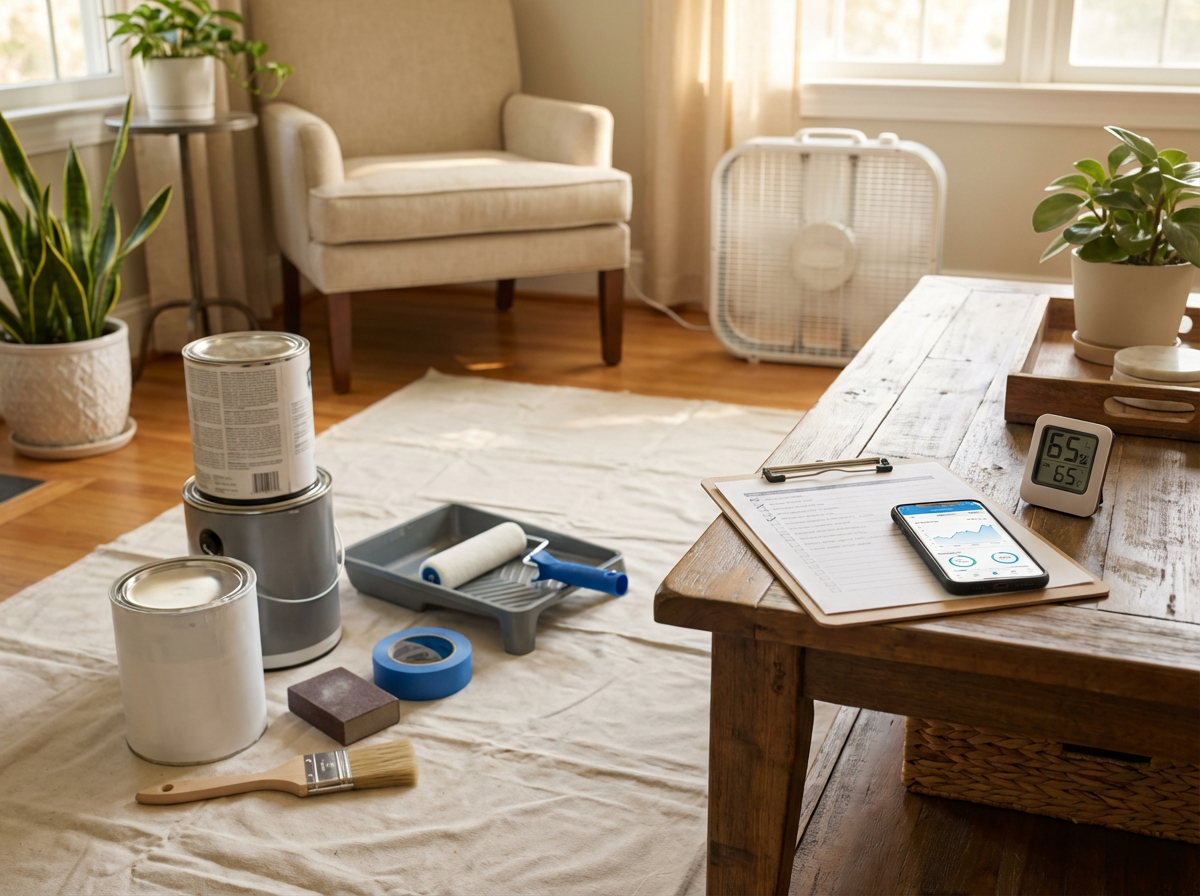
If you’re DIYing, slow down the process. Don’t rush recoat times, don’t overload the roller, and don’t paint on the muggiest week of the month if you can avoid it. Build in airflow and consider a dehumidifier if the room feels damp.
One more tip: plan for curing time after the last coat. Avoid hanging pictures, pushing furniture tight to the wall, or washing the surface until the paint has hardened.
Real Examples From Virginia Homes
In Virginia Beach, we helped a homeowner whose living room stayed sticky after a DIY job. The issue turned out to be thick coats plus closed windows. After proper prep, thin coats, and better airflow, the walls cured clean and solid and the finish stopped grabbing lint and fingerprints.
In Chesapeake, a bathroom remodel went sideways when standard paint was used in a high-moisture space. We switched to a moisture-resistant product, improved ventilation, and the tackiness disappeared. The homeowner also noticed the walls stayed cleaner because the finish was easier to wipe down.
In Norfolk, we’ve seen older walls with years of grime under the paint. Once we deep-cleaned, primed correctly, and repainted, the finish cured like it should and the color looked more even because the surface was properly sealed.
In Suffolk, a homeowner called during a humid stretch when paint “wouldn’t dry.” We rescheduled the repaint for better conditions, ventilated the space properly, and the paint set beautifully. Sometimes the smartest move is timing the work so the finish can actually cure.
How Weather and Humidity Affect Paint in Virginia
Humidity slows evaporation and curing, which is why coastal areas like Virginia Beach and Norfolk tend to see more issues in summer. Temperature matters too, most interior paints perform best in moderate conditions, and extremes can cause longer cure times or uneven results.
Spring and fall are usually the easiest seasons for interior painting here, but even then, airflow matters. If you’re painting during a humid week, fans and ventilation can be the difference between “dry in days” and “tacky for weeks.”
If your home tends to hold moisture (older windows, limited ventilation, lots of shade, or a bathroom without a strong fan), it’s worth planning ahead. A simple dehumidifier during and after painting can help the finish harden faster and reduce the risk of sticky walls.
FAQs
How long should interior paint take to dry in Virginia?
Most interior paints feel dry to the touch within a few hours, but that’s not the same as being fully cured. “Dry” means the surface isn’t wet anymore; “cured” means the paint film has hardened all the way through and can handle normal life—light cleaning, furniture bumps, kids touching the wall, and humidity changes.
In Virginia, especially in Virginia Beach and Norfolk, humidity can stretch curing time significantly. A room that would normally cure in about a week can take longer if the windows stay closed, the HVAC isn’t running consistently, or coats were applied heavily. Sheen also matters: glossier paints can feel tacky longer than flat or matte finishes.
If your paint is still sticky after 7 days, don’t panic but do treat it as a signal. Increase airflow, run fans, and consider a dehumidifier. Also avoid washing the walls or pushing furniture tight against them until the finish hardens.
Can I fix sticky paint without repainting?
Sometimes you can, and it depends on why it’s sticky. If the paint was applied correctly but the room is humid and poorly ventilated, the fix can be as simple as giving it more time under better conditions. Open windows when weather allows, run ceiling fans and box fans, and keep your HVAC steady. A dehumidifier can be a game-changer in damp rooms.
That said, if the tackiness is caused by thick coats, recoating too soon, or painting over grease/gloss without proper prep, the paint may never cure the way it should. In those cases, the “fix” usually involves sanding down the gummy layer, cleaning the surface, priming properly, and repainting with thinner coats.
A quick rule of thumb: if it’s slowly improving day by day, you may be able to save it with airflow and patience. If it feels the same (or worse) after a full week, it’s time to consider a professional assessment.
Why is my paint sticky only in certain spots?
When tackiness shows up in patches, it usually means the wall surface wasn’t consistent. One area might have been clean drywall, while another had hand oils, cooking residue, old cleaner buildup, or a glossy section that wasn’t sanded. Paint can cure normally on one part of the wall and stay soft where it couldn’t bond.
Uneven application can also cause this. If one section got a heavier coat like where a roller paused or a brush was worked too long, it can take much longer to cure, especially in humid weather.
The best next step is to identify the pattern. If it’s near light switches, doorways, or kitchen areas, contamination is likely. If it’s in roller-shaped bands, thickness is likely. Many times, a targeted fix works: lightly sand the sticky area, clean it well, spot-prime, and repaint that section using thin coats and good airflow.
What paint should I use for bathrooms and kitchens?
Bathrooms and kitchens are tough rooms because moisture, steam, and frequent cleaning put stress on the paint film. In these spaces, you typically want an interior paint specifically designed for kitchens and baths, something with better moisture resistance and washability than standard wall paint.
Sheen’s choice matters too. Many homeowners choose satin or semi-gloss because it’s easier to wipe down, but higher sheen can also highlight wall imperfections. The key is matching the product to the room and making sure ventilation is handled. Paint alone can’t overcome a bathroom with no fan and constant steam.
If you’re repainting after a sticky-paint problem, it’s also worth checking what’s underneath. In bathrooms especially, a proper primer can help the new finish coat bond and cure correctly. When in doubt, we recommend getting product guidance from a pro who paints in Virginia humidity every day.
Does Showstopper Painting guarantee the paint won’t stay sticky?
Yes, we don’t just paint and hope for the best. Our process is designed specifically for Virginia conditions, where humidity and temperature swings can make or break a paint job. We focus on the steps that prevent tackiness in the first place: thorough prep, correct primer use, the right paint for the room, thin even coats, and a ventilation plan so the finish can cure properly.
And if something still isn’t right, you’re covered. We back our work with a lifetime warranty and a 100% money-back guarantee. That means you’re not stuck living with sticky walls, weird texture, or a finish that never hardens. We’ll make it right or you get your money back.
Friendly Wrap-Up: We’re Here to Help (No Pressure)
Sticky paint is frustrating, but you don’t have to live with it, or guess your way through a fix. If you’re in Virginia Beach, Norfolk, Chesapeake, or Suffolk, Showstopper Painting is here with honest advice, expert interior painting, and a guarantee that truly has your back.
Want help now? Explore our interior painting services, learn more about the areas we serve, or read about our 100% money-back guarantee and lifetime warranty.