
If you own a brick home in Virginia Beach, there is a good chance you have looked at the outside of your house and wondered whether it still feels like your style. Maybe the brick looks dark and dated. Maybe the color feels too heavy. Or maybe you have seen a painted brick house nearby and thought, “That looks so much cleaner and more updated.”
That reaction makes sense. Painting brick can completely change the look of a home. It can brighten the exterior, modernize older brick, and create a more polished first impression. For many homeowners, it feels like one of the fastest ways to improve curb appeal without changing the structure of the house.
But here’s where it gets tricky: painting brick is a bigger decision than many people expect. This is not like repainting siding or changing a front door color. Brick is porous. It handles moisture differently than other exterior materials. And once it is painted, it usually becomes a long-term maintenance commitment.
This matters even more in coastal Virginia. If you are trying to decide should you paint brick in Virginia Beach, you have to think beyond color alone. Homes here deal with humidity, salt air, rain, and moisture exposure that can affect how well exterior coatings perform over time. A choice that looks great in the short term can become frustrating later if the brick was not in the right condition or the prep work was not done properly.
The good news is that painting brick can absolutely be the right move for some homes. The key is knowing when it makes sense, when it does not, and what you need to understand before moving forward. And if you decide that painting is the right option, you can even test different exterior paint colors on your home before making a final decision.
The Short Answer: Should You Paint Brick?
The short answer is yes, sometimes. Painting brick in Virginia Beach can be a smart choice when the brick is in good condition, the home does not have ongoing moisture problems, and the homeowner is comfortable with the long-term upkeep that comes with painted masonry.
For some homes, painting brick creates a dramatic improvement. It can make an older exterior feel fresh and current. It can help a house look brighter, cleaner, and more intentional. If your goal is to improve brick house curb appeal in Virginia Beach, painting brick may be exactly the update your home needs.
That sounds great in theory, but there is another side to the decision. Once brick is painted, it is very difficult to return it to its original natural look. Painted brick also needs more maintenance than natural brick. Over time, it may need cleaning, touch-ups, and repainting. In a humid coastal climate, those realities matter.
So the honest answer is this: painting brick is a good idea when the brick is sound, the prep is done right, and the homeowner understands the long-term tradeoffs. It is probably not the best idea when the brick has moisture issues, visible damage, or strong natural character that would be hard to replace once covered.
Why Homeowners Consider Painting Brick
Most homeowners do not start this process by thinking about masonry coatings. They start by looking at their home and feeling like something is off. The house may be well built and structurally solid, but the exterior no longer feels current. That is often what leads people to explore exterior brick painting in Virginia.
Older red brick can make a home feel darker or more dated than the homeowner wants. In some cases, the brick itself is fine, but it clashes with newer trim, shutters, roofing, or landscaping. In other cases, the brick has stains, patchy repairs, or uneven color variation that makes the whole exterior look tired.
Painting bricks can solve those visual problems in a big way. It creates a more unified look. It can soften harsh color variation. It can help the home feel brighter and more updated without changing the footprint of the property.
For some homeowners, the motivation is personal enjoyment. They want to love the way their house looks when they pull into the driveway. For others, the motivation is resale. They want the home to make a stronger first impression and feel more appealing to buyers.
A few common reasons homeowners consider painting brick include:
- Updating old or dated-looking brick
- Creating a cleaner, more modern exterior
- Improving curb appeal before selling
- Covering mismatched brick repairs or staining
- Coordinating the brick with newer trim, shutters, or roofing
- Giving the home a lighter, brighter appearance
In many neighborhoods around Virginia Beach, Chesapeake, Norfolk, and Suffolk, homeowners are trying to strike a balance between timeless and updated. Painted brick can help with that, but only when the decision is made carefully.
The Pros of Painting Brick
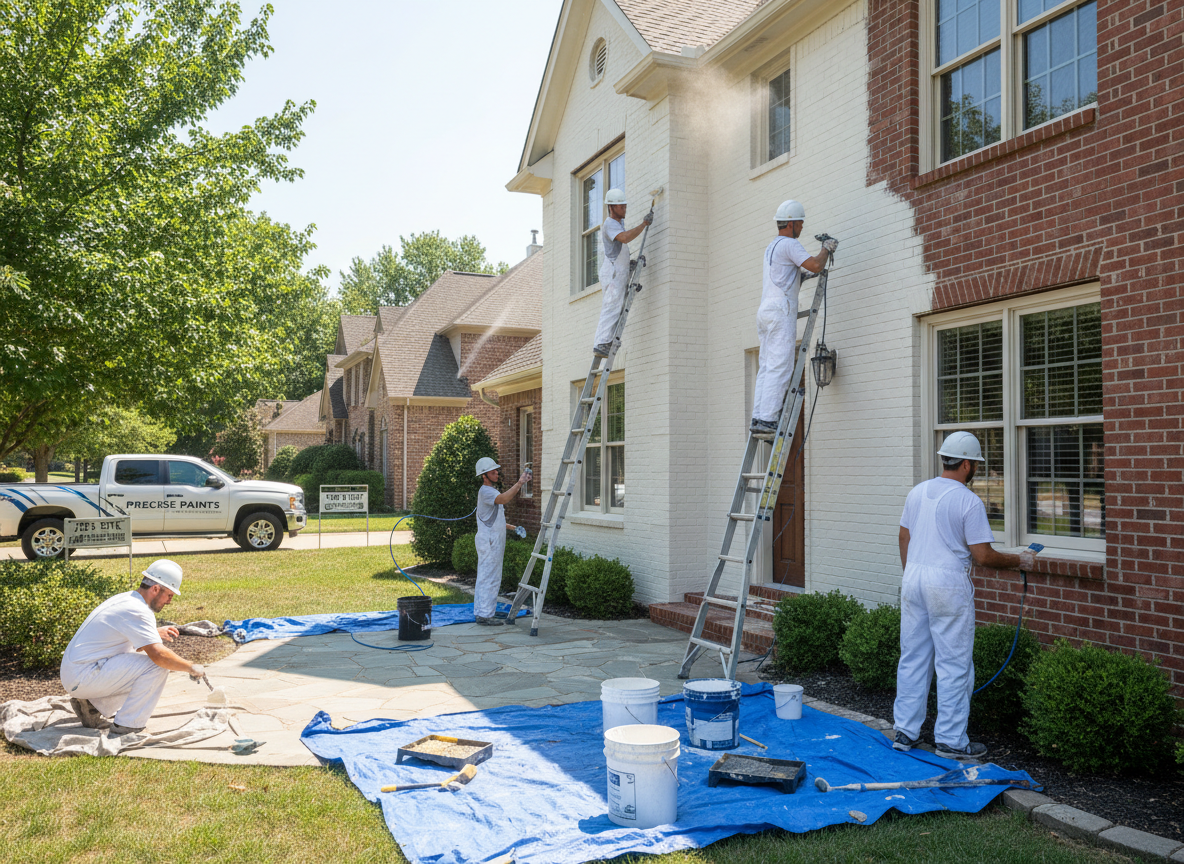
One of the biggest advantages of painting brick is the visual transformation. A home that feels heavy, dull, or outdated can suddenly look fresh and custom. That is why so many homeowners searching paint brick house Virginia Beach are really looking for a way to change the overall feel of the property.
Paint also gives homeowners more control over the final look. Natural brick comes with whatever color variation, undertones, and texture it already has. Paint creates a more consistent finish. If your home has several exterior elements competing for attention, painting the brick can simplify the palette and make the whole house feel more cohesive.
Another major benefit is curb appeal. A professionally painted brick home often looks crisp and well maintained from the street. This can be especially helpful if the home has older brick that visually drags down the rest of the exterior. When paired with the right trim color, shutters, door color, and landscaping, painted brick can make a house look significantly more updated.
Painting can also help hide cosmetic imperfections. If the brick has discoloration, stains, or mismatched sections from old repairs, paint can create a more even appearance. It does not fix structural issues, of course, but it can improve the look of brick that is visually inconsistent.
There is also a practical benefit when the right system is used. A properly prepared and coated brick surface can hold up well and give the home a clean, protected finish. That does not mean paint is maintenance-free, but it can perform well when the masonry is healthy and the products are chosen carefully.
The biggest benefits usually include:
- A more modern and updated exterior appearance
- Stronger curb appeal
- Better coordination with trim and accent colors
- A cleaner, more uniform look
- Improved appearance of stained or mismatched brick
- A chance to refresh the home without major renovation
For the right homeowner, those benefits are meaningful. A painted brick exterior can completely change how a house feels.
The Cons and Long-Term Tradeoffs
Now let’s talk about the side of the decision that gets glossed over too often. The conversation around painted brick pros and cons needs to be honest, especially in a place like Virginia Beach.
The biggest downside is permanence. Once brick is painted, it is very hard to go back. Brick is porous, which means paint bonds to the surface in a way that is not easy to reverse. Technically, paint removal is possible in some cases, but it is usually expensive, messy, and not guaranteed to restore the original look of the brick.
That alone makes this a serious decision. If you are only kind of interested in painted brick, that is usually a sign to slow down and think harder before moving forward.
The next tradeoff is maintenance. Natural brick can age with relatively little cosmetic upkeep. Painted brick is different. It may need periodic washing, touch-ups, and eventually repainting. If the home has high sun exposure, lots of moisture, or areas where water tends to sit, maintenance may come sooner than expected.
Here’s where it gets even more important for coastal homes: moisture. Brick naturally absorbs and releases moisture. That is part of how it functions. If the wrong products are used, or if the brick already has hidden water issues, paint can trap moisture instead of letting it escape. That can lead to peeling, bubbling, blistering, efflorescence, or even damage to the masonry over time.
Poor prep makes this much worse. If a contractor skips repairs, paints over failing mortar, or coats brick before it is dry enough, the finished result may look fine at first and then start failing early. That is one reason brick painting has such mixed reviews. The problem is often not brick painting itself. The problem is how it was done.
Here is a side-by-side comparison that helps frame the decision:
| Factor | Paint Brick | Leave Brick Natural |
| Appearance | Clean, updated, customizable | Classic, original, textured |
| Maintenance | Higher; requires touch-ups and repainting over time | Lower cosmetic upkeep overall |
| Cost over time | Often higher due to long-term maintenance | Often lower if brick remains sound |
| Moisture risk | Higher if prep or product choice is wrong | Lower when brick can breathe naturally |
| Flexibility later | Hard to reverse | More options remain open |
| Best fit | Homeowners wanting a major visual update | Homeowners wanting original character and less upkeep |
That does not mean painting brick is a mistake. It just means it should be treated like a long-term exterior system, not a quick cosmetic shortcut.
Virginia Beach Factors Homeowners Need to Think About First
This is where local conditions really matter. Advice about painting brick is not one-size-fits-all. What works in a dry inland climate may not be the best approach near the coast. Virginia Beach homes deal with a mix of humidity, rain, salt air, and seasonal weather shifts that can affect how well exterior coatings hold up.
Humidity is a big factor. High humidity can slow drying and curing, which matters during prep and application. If coatings are applied under the wrong conditions, or if the brick has not dried enough after cleaning, that can create problems later.
Salt air is another issue. Homes closer to the coast often experience more wear on exterior surfaces because salt can be hard on finishes over time. Add in wind-driven rain and regular moisture exposure, and you have a climate where prep and product selection become even more important.
This matters even more in coastal Virginia because brick needs to breathe. If moisture gets into the masonry, it needs a path back out. A breathable coating system helps with that. A poor system can trap moisture behind the paint film, which is where many failures begin.
Homeowners should also think about how exposed the house is. A brick home in a shaded area with slower drying conditions may behave differently than a home with full sun and strong airflow. A house near the water may deal with more salt and moisture than one farther inland. These details affect how a brick painting project should be approached.
Before painting brick in Virginia Beach, homeowners should think carefully about:
- The condition of the brick and mortar
- Whether there are signs of moisture intrusion
- How much shade, rain exposure, and salt air the home gets
- Whether the planned coating system is breathable
- Whether they are prepared for long-term upkeep
This is one of those projects where local experience really matters. A contractor who understands coastal conditions is much more likely to spot the issues that can affect long-term performance.
When Painting Brick Is a Good Idea
Painting brick is often a good idea when the brick is structurally sound but visually holding the home back. Some homes have brick that is not especially historic, distinctive, or architecturally important, but it does make the house feel older or darker than the homeowner wants. In that case, painting can create a major improvement.
It can also make sense when the brick has cosmetic problems that are difficult to ignore. Maybe there are old stains that never fully came out. Maybe the house has mismatched brick from repairs or additions. Maybe the color variation is uneven in a way that distracts from the rest of the exterior. If the masonry is healthy, paint can create a clean reset.
Another good reason is design cohesion. If the homeowner is updating the whole exterior, including trim, shutters, doors, and landscaping, painting the brick may be the move that ties everything together. Without it, the home may still feel visually stuck between old and new.
Painting brick can also be a good fit when the homeowner clearly understands the maintenance side of the decision. If they know that brick painting maintenance is part of the package and they are comfortable with that, then the benefits may be well worth it.
Good candidates for painting brick often include homes that:
- Have healthy brick and mortar
- Do not have active moisture issues
- Need a major curb appeal update
- Have patchy, stained, or mismatched brick
- Are not relying on natural brick for historic character
- Have owners who are comfortable with long-term upkeep
In those situations, painting brick can be a smart, attractive, and worthwhile investment.
When Painting Brick Is Probably a Bad Idea
Sometimes the best advice is not to paint. If the brick is damaged, soft, crumbling, or already showing signs of moisture problems, painting is usually not the right first step. The underlying issue needs to be fixed before any coating is even considered.
This is especially true if you see efflorescence, peeling from a previous coating, spalling, or deteriorating mortar joints. Those are signs that the brick may already be struggling with moisture or surface failure. Painting over those problems may hide them for a short time, but it will not solve them.
Painting may also be a poor choice if the natural brick is one of the home’s strongest features. Some homes have brick with beautiful variation, texture, and timeless character. Once that is covered, it is very hard to get back. If the brick is a major part of the home’s charm, it may be better to clean it, repair it, and update the surrounding elements instead.
Historic homes deserve extra caution too. In some cases, painting brick can reduce architectural authenticity or create maintenance issues that did not exist before. Even if the finished look is attractive, it may not be the best long-term decision.
Painting brick is probably a bad idea when:
- The home has active water intrusion issues
- The brick is soft, damaged, or spalling
- Mortar joints are failing and need repair
- There are signs of trapped moisture
- The natural brick has strong architectural or historic value
- The homeowner wants the lowest-maintenance option possible
That does not mean “never.” It means “not yet” or “probably not for this house.”
Paint vs Limewash vs German Smear
If you are not sure standard paint is the right choice, you do have other options. Many homeowners comparing finishes for brick end up looking at limewash vs paint brick, and some also consider German smear.
Paint creates the most solid and uniform finish. It gives the biggest visual transformation and offers the widest range of color choices. If your goal is a clean, modern, fully updated look, paint is usually the strongest option.
Limewash is softer and more natural-looking. Instead of creating a heavy film over the surface, it gives the brick a more muted, chalky appearance that still lets some texture and variation show through. Many homeowners like limewash because it feels less crisp and more organic than paint.
German smear is different from both. It uses mortar to create a textured, old-world finish. The result is more decorative and more rustic. It can look beautiful on the right home, but it is a stronger style statement and not as universally appealing as paint or limewash.
Here is a simple comparison:
| Option | Look/Style | Durability | Breathability | Maintenance Needs | Best Use Case | Ideal Homeowner Type |
| Paint | Solid, clean, modern, uniform | Strong when done correctly | Moderate; depends on product | Washing, touch-ups, repainting over time | Full exterior transformation | Wants a bold update and broad color choice |
| Limewash | Soft, matte, aged, natural | Good, but wears differently than paint | High | May need refreshing, but lower peeling risk | Homeowners wanting a lighter look with visible texture | Wants character and breathability |
| German Smear | Textured, rustic, old-world | Durable when applied well | Varies | Repairs can be more specialized | Cottage, traditional, or highly styled homes | Wants a custom decorative finish |
So, which one is best? It depends on the home and the goal. If the homeowner wants a dramatic, polished update, paint is often the answer. If they want a softer, more breathable look, limewash may be a better fit. If they want a textured, handcrafted appearance, German smear may be worth considering.
This is also where design expectations matter. Some homeowners think they want painted brick, but what they really want is a lighter, softer version of the original masonry. In that case, limewash may deliver the look they are after with a different feel and maintenance profile.
What Proper Brick Prep Should Look Like
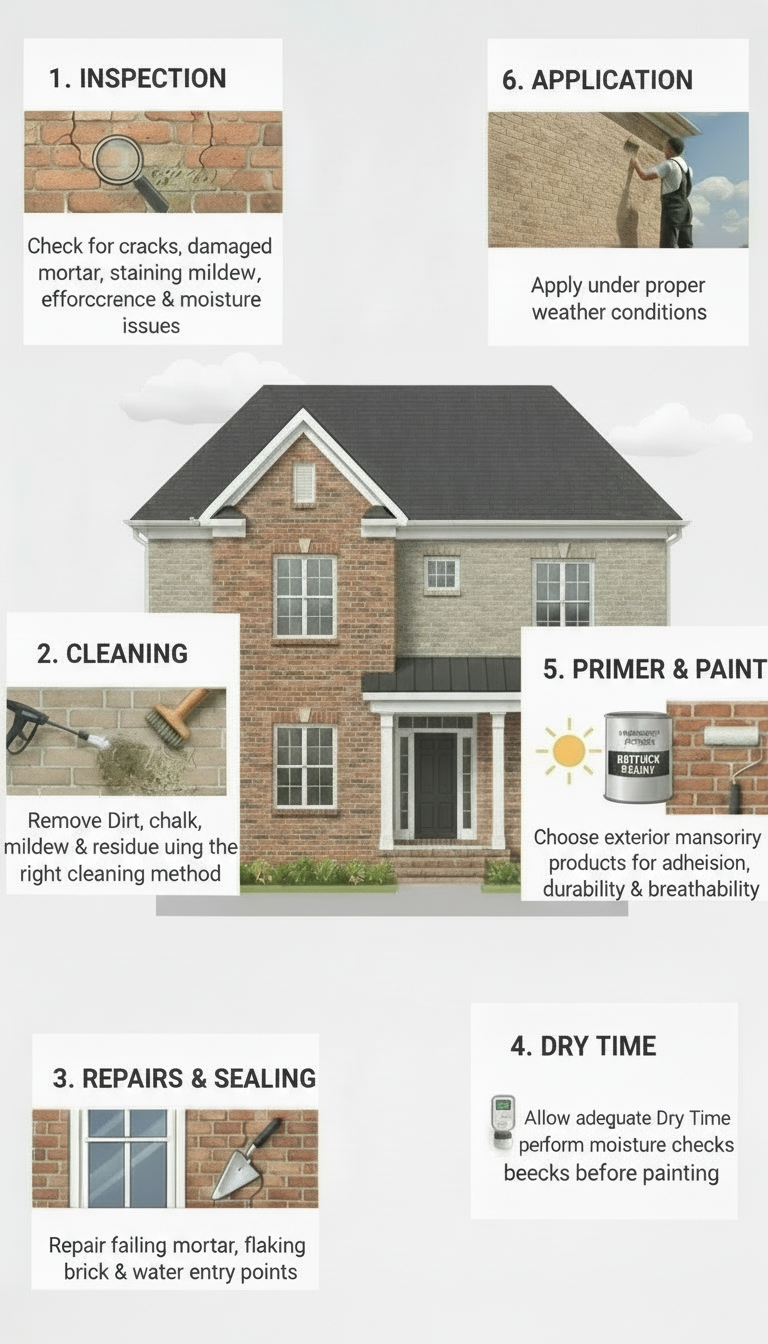
If there is one part of this whole decision that matters most, it is prep. Brick painting success usually comes down to what happens before the finish coat ever goes on.
A proper process starts with inspection. The brick should be checked for cracks, damaged mortar, staining, mildew, efflorescence, and signs of moisture intrusion. If those issues exist, they need to be understood before anyone starts talking about color.
Then comes cleaning. Dirt, chalk, mildew, and salt residue need to be removed so the coating can bond correctly. That does not always mean blasting the house with high pressure. In fact, overly aggressive washing can damage mortar or force water deeper into the masonry. The cleaning method should match the age and condition of the brick.
Repairs should happen before paint, not after. If mortar joints are failing, they need repair. If the brick is spalling or flaking, that issue needs attention. If water is getting in around windows, trim, flashing, or other transitions, the source has to be addressed.
After cleaning and repairs, the brick needs time to dry. This step gets rushed more often than it should, especially in humid climates. But dry time matters. Painting brick that still holds too much moisture is one of the fastest ways to create future coating problems.
From there, the right primer and finish products need to be selected. Not every exterior paint is a good fit for masonry. Product choice should support adhesion, durability, and breathability.
A proper brick prep process usually includes:
- Full inspection of brick, mortar, and surrounding transitions
- Cleaning to remove dirt, mildew, and residue
- Masonry repair where needed
- Moisture checks and adequate dry time
- Primer and paint products suited for exterior masonry
- Careful application under the right weather conditions
This is one reason homeowners should be cautious about choosing a contractor based on price alone. If someone is dramatically cheaper, it is worth asking what they are skipping. On brick, shortcuts often show up later.
What Maintenance Looks Like After Brick Is Painted
One of the best things a homeowner can do before painting brick is ask, “What will this look like five years from now?” That question helps shift the decision from excitement to realism.
Painted brick is not a one-time upgrade that never needs attention again. It can look great and perform well for years, but it still needs maintenance. In Virginia Beach, that usually means periodic washing to remove dirt, mildew, and salt buildup. It also means watching the home for small issues before they turn into bigger ones.
Areas around trim, windows, doors, and caulk lines deserve special attention. These are common places where moisture can sneak in. If the home has spots that stay damp longer, those areas may need closer monitoring too.
Some homes will need touch-ups in high-exposure areas before others. Eventually, repainting may be needed depending on sun exposure, product quality, prep quality, and how much weather the home takes on. Coastal conditions can shorten maintenance cycles compared to milder inland environments.
That does not mean painted brick is a bad choice. It just means homeowners should go in with realistic expectations. If you love the updated look and are willing to maintain it, painted brick may still be a great investment. If you want the lowest-maintenance exterior possible, natural brick usually has the edge.
How Showstopper Painting Helps Homeowners Make the Right Call
At Showstopper Painting, the goal is not to push every homeowner toward painting brick. The goal is to help homeowners make the right decision for their specific house.
Sometimes that means painting brick is absolutely the right move. Sometimes it means recommending repairs first. And sometimes it means saying that the brick should stay natural because that is the better long-term choice.
That honest approach matters, especially in coastal Virginia. Homeowners in Virginia Beach, Chesapeake, Norfolk, and Suffolk are not just making style decisions. They are making decisions about moisture, maintenance, and how their exterior will hold up over time. A family-owned company with local experience can help homeowners think through those tradeoffs clearly.
If painting brick is the right fit, Showstopper Painting can help with evaluation, prep planning, product selection, and the full exterior painting process. If it is not the right fit, that should be said clearly too. Good advice is not about selling the biggest project. It is about helping the homeowner make a decision they will still feel good about years later.
Homeowners who are researching related topics may also find these resources helpful: Exterior House Painting, House Painters, Virginia Beach, Chesapeake, Norfolk, Our Guarantee, Money-Back Guarantee, Prep Work in Exterior Painting, Benefits of Power Washing Before Exterior Painting, The Impact of Salt Air on Exterior Paint in Virginia Beach, How Virginia Beach’s Coastal Climate Affects Your Home’s Exterior Paint, and How to Choose the Right Exterior Painting Contractor in Virginia Beach.
Frequently Asked Questions
Is painting exterior brick a bad idea in Virginia Beach?
Not necessarily. Painting exterior brick in Virginia Beach can be a very good idea when the brick is in solid condition, the home does not have active moisture problems, and the right breathable products are used. The real issue is not painting itself. The real issue is painting brick that should not be painted yet, or using the wrong prep and coating system in a humid coastal environment. When the masonry is healthy and the work is done correctly, painted brick can look beautiful and hold up well. When moisture problems are ignored, the project can fail much sooner.
How long does painted brick last?
Painted brick can last for many years, but the exact timeline depends on several factors. The condition of the brick, the quality of the prep work, the products used, and the amount of exposure to sun, rain, humidity, and salt air all play a role. In Virginia Beach, coastal conditions can be harder on exterior finishes than in drier inland areas. That means homeowners should expect ongoing maintenance and understand that touch-ups or repainting may eventually be part of the long-term plan.
Does painting brick increase home value?
Painting brick can improve the perceived value of a home by making it look cleaner, more updated, and better maintained. It often helps with curb appeal, which matters a lot when buyers or guests first see the property. That said, value is not just about trends. Some buyers love painted brick, while others strongly prefer natural masonry. In most cases, the biggest benefit is visual appeal and a stronger first impression rather than a guaranteed increase in resale price.
What is better for exterior brick: paint or limewash?
That depends on the look the homeowner wants and how much coverage they need. Paint creates a more solid, uniform finish and gives the biggest visual transformation. Limewash creates a softer, more natural appearance that lets some of the brick texture and variation show through. Many homeowners comparing limewash vs paint brick choose limewash when they want a breathable, aged look and choose paint when they want a cleaner, more modern update. Neither option is automatically better in every case. The best choice depends on the home, the condition of the brick, and the homeowner’s style goals.
Can painted brick be restored to natural brick later?
In most cases, not easily. This is one of the most important things homeowners need to understand before moving forward. Because brick is porous, paint bonds deeply into the surface. Removing it later is difficult, expensive, and not always fully successful. Even when removal is possible, the original look of the brick may not come back evenly. If you are unsure whether you want to commit to painted brick long term, that is a sign to slow down and explore all your options first.
What maintenance does painted brick need?
Brick painting maintenance usually includes periodic washing, watching for mildew or salt buildup, checking caulk lines and transitions, and handling small touch-ups before they become larger issues. Homes in Virginia Beach may need a little more attention because of humidity and coastal exposure. Painted brick can absolutely be worth it, but it is not maintenance-free. Homeowners should expect more upkeep than they would with natural brick and plan accordingly.
Conclusion
So, should you paint bricks in Virginia Beach? For some homes, yes. It can dramatically improve curb appeal, modernize the exterior, and give the home a cleaner, brighter, more updated look. For other homes, the better answer is to leave the brick natural, repair existing issues, or consider alternatives like limewash.
The key is making the decision with open eyes. Brick painting is not just about color. It is about moisture, prep, product choice, maintenance, and how your home handles coastal Virginia weather. Those details matter, and they matter even more near the coast.
If you live in Virginia Beach, Chesapeake, Norfolk, or Suffolk and want honest guidance on whether painting your brick makes sense, Showstopper Painting is here to help. The goal is not to push paint where it does not belong. The goal is to help you make the right call for your home, your style, and your long-term peace of mind.