
If you have looked at your walls, trim, or siding and wondered, is hiring professional painters worth it, you are not alone. Many homeowners across Virginia Beach, Chesapeake, Norfolk, and Suffolk ask that same question every year. On the surface, painting seems simple enough. Buy the paint, pick up a few tools, watch a few videos, and spend a weekend doing it yourself. That sounds reasonable at first.
But once most people get into a real painting project, they quickly learn there is a big difference between painting and painting well. A room that looks like a quick Saturday job can turn into several long days of moving furniture, patching holes, sanding rough spots, taping edges, applying primer, waiting for coats to dry, and cleaning up. Exterior jobs can be even more demanding because weather, moisture, height, and surface condition all matter.
At Showstopper Painting, we believe homeowners deserve an honest answer, not a sales pitch. Sometimes DIY is the right choice. Sometimes hiring professional painters in Virginia is clearly the better investment. The right decision depends on the size of the project, your timeline, your comfort level, and how important long-term results are to you. This guide is here to help you weigh both sides fairly so you can make the best choice for your home.
Why Homeowners Consider DIY Painting
There is a reason DIY painting stays popular. For many homeowners, the biggest appeal is cost. Labor is often the largest part of a painting quote, so it makes sense that people look at a room and think, If I do the work myself, I can save a lot of money. That is not a bad instinct. In some cases, it is true.
DIY also feels more personal. Some homeowners enjoy hands-on home improvement projects and like the satisfaction of seeing a room change because of their own effort. Others want full control over the schedule. They do not want to wait for an estimate, book a project date, or coordinate around a crew. They want to start when they are ready and move at their own pace.
The internet has also made DIY painting feel more approachable. There are endless tutorials showing smooth rolling techniques, perfect cut lines, and dramatic before-and-after shots. Those videos can be helpful, but they often make the process look faster and easier than it really is. What gets skipped over is the slow part: prep, repairs, drying time, second coats, and the skill it takes to get a clean, even finish.
There is also the weekend project mindset. A lot of homeowners think, It is just one room, or It is just the front porch trim. That kind of thinking is understandable. Small jobs can look manageable from a distance. But even simple projects can grow once you discover peeling paint, nail pops, water stains, cracked caulk, or color coverage issues.
For some homeowners, DIY painting really can be a good fit. If you have patience, decent tools, steady hands, and enough time, you may be able to get a solid result on a small interior project. But that only tells one side of the story. To answer should I hire a painter or do it myself, it helps to look at what DIY painting really costs once the work begins.
What DIY Painting Really Costs
When people compare DIY vs professional painting, they usually start with the obvious numbers. A gallon of paint costs less than hiring a crew, so DIY looks cheaper. But the real cost of painting is not just the paint. It is everything around the paint that makes the finish look good and last.
A typical DIY project often starts with a shopping list that gets longer by the hour. You may need brushes, roller frames, roller covers, trays, liners, painter’s tape, drop cloths, patching compound, sandpaper, caulk, primer, extension poles, cleaning supplies, and maybe even a ladder. If you are painting outside, you may also need scraping tools, pressure washing equipment, safety gear, or specialty products for wood, siding, or trim.
Then there is the time cost. That part gets overlooked more than anything else. A homeowner may think a room will take one day, but the project can easily stretch into several evenings and a full weekend. Moving furniture, protecting floors, patching damage, waiting between coats, and putting everything back takes longer than most people expect. If the space is a kitchen, bathroom, or main living area, that delay can become frustrating fast.
Mistakes also have a price. If the wrong sheen is used, the wall texture may stand out more than expected. If the old surface is not cleaned well enough, the paint may not bond properly. If the color does not cover in one coat, you may need more paint than planned. If the lines around trim or ceilings look uneven, fixing them takes more time and more material. Sometimes the job ends up costing more because the homeowner has to repaint sooner or hire a professional to correct the result.
That is why the true house painting cost Virginia homeowners should think about is not only the upfront price. It is the total cost of materials, time, effort, risk, and durability.
DIY Painting vs Professional Painting Cost Comparison
| Category | DIY Cost/Impact | Professional Cost/Impact | What Homeowners Often Miss |
| Paint and materials | Lower labor cost, but supplies add up quickly | Higher upfront quote, often with better planning | Small purchases can quietly push DIY over budget |
| Prep work | Time-heavy and easy to rush | Included in the process | Prep often determines whether paint lasts or fails |
| Tools and equipment | May require buying ladders, poles, sanding tools, and more | Pros already have the right equipment | One-time tool costs reduce the savings of DIY |
| Time commitment | Can take several days or weekends | Usually completed much faster | Delays can disrupt normal life more than expected |
| Risk of mistakes | Higher chance of drips, missed repairs, and uneven coverage | Lower risk because of experience | Fixing mistakes can cost more than doing it right once |
| Durability | Depends heavily on technique and prep | Usually more consistent and longer-lasting | A cheaper job is not cheaper if it needs repainting sooner |
This is often the point where homeowners begin to see the issue differently. DIY may be less expensive at the start, but once you factor in tools, time, rework, and how long the finish lasts, the gap is not always as wide as it first appears.
Where Professional Painters Add Real Value
Professional painters bring value in ways homeowners do not always see right away. Most people notice the final color, but the real difference often comes from what happens before the first coat is applied. That includes evaluating the surface, identifying problem areas, choosing the right products, and preparing everything correctly.
A strong paint job starts with prep. That means cleaning surfaces, scraping loose paint, filling cracks, sanding rough areas, caulking gaps, and priming where needed. These steps are not exciting, but they matter. Paint sticks better, looks smoother, and lasts longer when the surface underneath is sound. This is one of the biggest differences in interior painting vs DIY and one of the main reasons professional results tend to hold up better over time.
Professionals also understand product selection. Not every paint works the same way on drywall, trim, siding, cabinets, or previously painted surfaces. Sheen matters. Coverage matters. Dry time matters. Moisture resistance matters. A painter with experience knows what performs best in each setting and how to avoid common problems like flashing, lap marks, peeling, or poor adhesion.
There is also the value of efficiency. A skilled crew can move through a project with a system. They know how to protect surfaces, keep a wet edge, maintain clean lines, and work in the right order. That saves time and reduces stress for the homeowner. Instead of spending multiple days living around a project, you get a smoother process and a cleaner result.
Safety is another major factor, especially for exteriors, stairwells, and tall interior spaces. Working off ladders or reaching awkward areas is where many DIY projects become risky. A professional team is better equipped to handle those conditions safely and consistently.
And finally, there is durability. A paint job that looks good for a few months is not the same as one that still looks strong years later. When homeowners ask if hiring professional painters is worth it, long-term performance is a big part of the answer. A better-prepped, better-applied job often means fewer touch-ups, fewer headaches, and a longer time before repainting is needed.
Virginia-Specific Factors That Change the Decision
Virginia homeowners have a few extra things to think about when deciding between DIY and hiring a pro. Painting is not just about color choice or labor cost. Local climate plays a big role in how well paint performs, especially on exterior surfaces.
In Virginia Beach and Norfolk, coastal conditions can be tough on a home. Salt air, moisture, strong sun, and changing weather can wear down paint faster than many homeowners expect. Even if a surface looks dry, humidity can still affect how paint cures. That matters because paint that dries too slowly or unevenly may not bond the way it should.
Chesapeake and Suffolk bring their own challenges too. Heat, humidity, pollen, rain, and seasonal shifts can all affect timing. Exterior painting in Virginia humidity is not something to guess your way through. If the surface is damp, if rain is too close in the forecast, or if temperatures swing too much, the final result can suffer. Problems like blistering, peeling, streaking, or early failure often trace back to timing and prep.
This is where local experience becomes especially valuable. A company that paints homes in this region every day knows what materials hold up well, when to schedule exterior work, and how to prep for the conditions common in southeastern Virginia. That kind of knowledge can make a real difference in how long the job lasts.
It also matters for interior painting. Virginia humidity can affect drying time indoors too, especially in bathrooms, kitchens, laundry rooms, and older homes with less consistent airflow. A professional team understands how to manage those conditions so the finish cures properly and looks even.
For homeowners trying to decide should I hire a painter or do it myself, local climate is one of the biggest reasons the answer may be different in Virginia than it would be in a drier, milder place.
When DIY Might Make Sense
To be fair, not every project needs a professional crew. There are situations where DIY painting is a practical choice and can work out well. If the project is small, low-risk, and easy to access, many homeowners can get a decent result with enough patience and preparation.
A spare bedroom is a good example. So is a simple accent wall, a closet, or small touch-up work where the stakes are low. If you are repainting with a similar color, the walls are in good shape, and you already have the tools, DIY may save money without creating too much stress.
DIY can also make sense for homeowners who genuinely enjoy this kind of work. Some people do not mind spending a weekend taping, sanding, cutting in, and rolling carefully. If that sounds satisfying instead of frustrating, and if you are realistic about the time involved, a smaller project may be worth doing yourself.
That said, even DIY-friendly jobs go better when homeowners stay disciplined. Good results usually depend on taking prep seriously, choosing the right finish, and not rushing the second coat just because the room looks almost done.
Projects that are often more DIY-friendly include:
- Small bedrooms or home offices
- Accent walls
- Minor touch-ups
- Easy-access trim in good condition
- Low-traffic spaces where perfection matters less
The key is being honest about your skill level, patience, and available time. DIY makes the most sense when the project is forgiving and the consequences of mistakes are small.
When Hiring a Pro Is Usually Worth It
There are also plenty of situations where hiring a professional is usually the smarter move. These are the projects where mistakes are expensive, safety becomes a concern, or the finish quality matters too much to leave to trial and error.
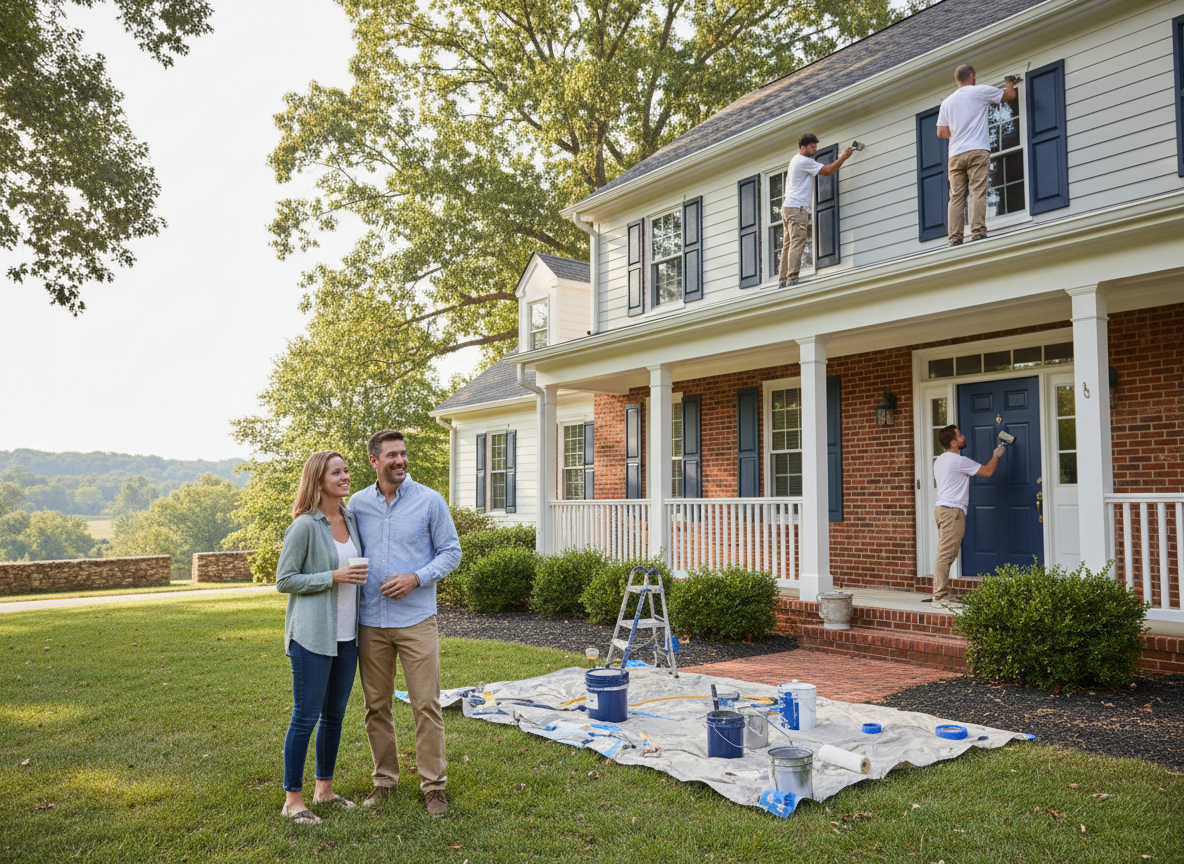
Exterior painting is one of the clearest examples. Between prep, weather timing, ladders, and surface wear, it is simply more demanding than most homeowners expect. A house exterior also has a bigger job to do than an interior wall. It has to stand up to sun, rain, humidity, and seasonal changes. If the prep is rushed or the product is wrong, the paint may fail much sooner than it should.
Cabinet painting is another project that often looks easier than it is. Cabinets need careful cleaning, sanding, priming, and product selection to achieve a smooth, durable finish. If that process is rushed, the result can feel sticky, chip easily, or show brush marks. Since cabinets are highly visible and used every day, mistakes stand out fast.
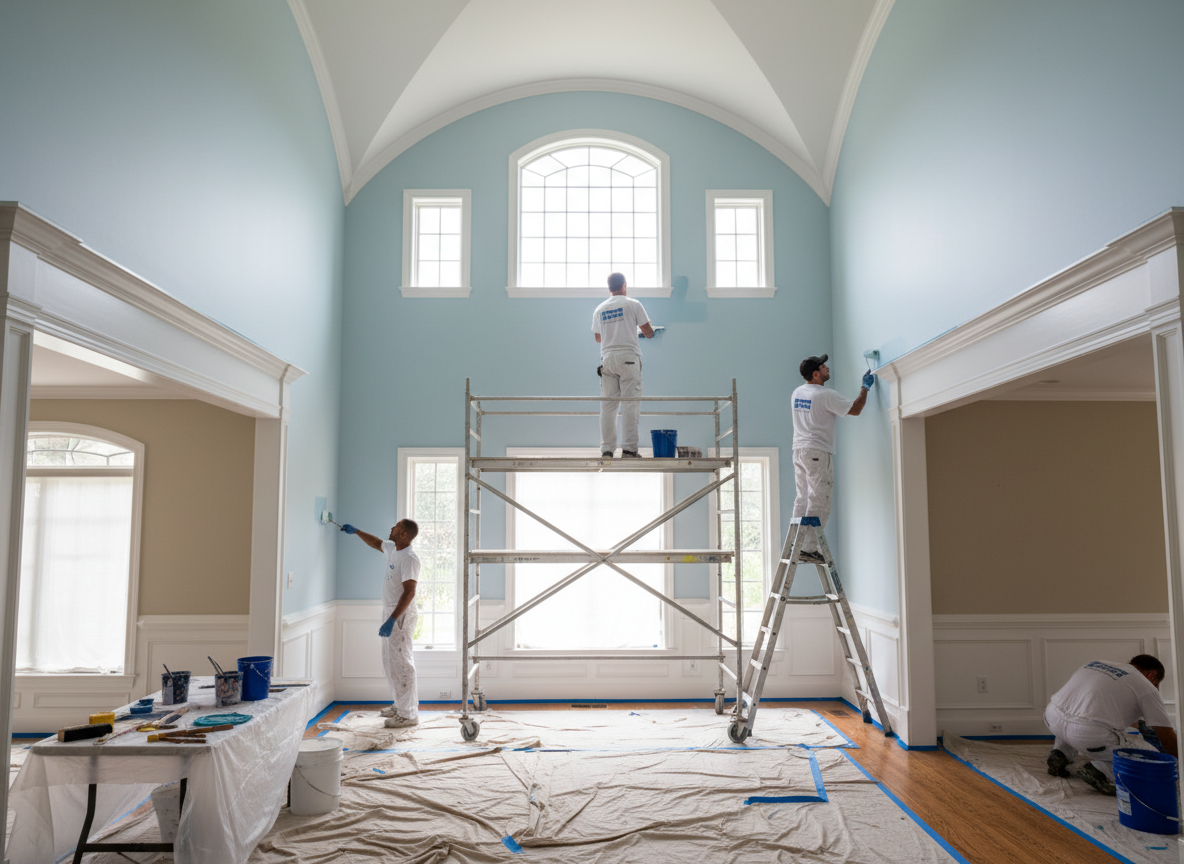
Large homes, tall foyers, stairwells, and rooms with vaulted ceilings also tend to be better left to professionals. These spaces are harder to cut in cleanly, harder to keep consistent, and much harder to do safely. The same goes for damaged drywall, peeling trim, or any surface that needs repair before painting can even begin.
Hiring a pro is also often worth it when time matters. If you are getting ready to sell your home, preparing for guests, finishing a remodel, or trying to complete work before weather changes, efficiency becomes part of the value. A professional crew can usually complete the work faster and with less disruption.
Best Projects for DIY vs Best Projects for Professional Painters
| Project Type | DIY-Friendly? | Better for Pros? | Why |
| Small bedroom repaint | Yes | Sometimes | Lower risk and easier access |
| Accent wall | Yes | No | Simple scope and limited materials |
| Basic touch-ups | Yes | No | Good for minor cosmetic fixes |
| High foyer or stairwell | No | Yes | Safety and clean lines are harder to manage |
| Exterior siding | No | Yes | Weather, prep, and height add major risk |
| Cabinet painting | Rarely | Yes | Finish quality and durability depend on process |
| Large open living area | Sometimes | Yes | Uneven coverage shows easily in natural light |
| Damaged drywall or peeling surfaces | No | Yes | Repairs and primer choice matter a lot |
For many homeowners, this is where the answer becomes clearer. If the project is simple and forgiving, DIY may be fine. If the project is visible, technical, weather-sensitive, or difficult to correct, hiring a professional usually offers better value.
Common Mistakes Homeowners Make With DIY Painting
Most DIY paint jobs do not go wrong because the homeowner did not care. They go wrong because painting has more technical steps than people expect. The most common problems usually start before the paint even opens.
Poor prep is the biggest issue by far. Homeowners often underestimate how much cleaning, patching, sanding, and priming is needed. A wall may look ready, but if it still has dust, grease, gloss, or damaged areas, the paint may not bond well. On exteriors, loose paint, mildew, chalky surfaces, and cracked caulk can all shorten the life of the job.
Another common mistake is choosing the wrong sheen. Flat, eggshell, satin, semi-gloss, and higher-sheen finishes all behave differently. The wrong choice can make wall flaws stand out, create too much shine, or make cleaning harder than it should be. This is especially important in bathrooms, kitchens, trim, and high-traffic areas.
Homeowners also often underestimate coverage. A color change may need more than one coat, especially if the old color is dark or the new color has less hiding power. If someone buys paint based on best-case coverage instead of real conditions, they can end up short halfway through the project.
Weather mistakes are another big issue, especially outdoors. Painting when humidity is high, when rain is too close, or when surfaces are still damp can lead to problems that may not show up until later. The same goes for painting in direct harsh sun or when temperatures are outside the product’s recommended range.
A few common DIY mistakes include:
- Skipping primer when the surface really needs it
- Using low-quality brushes or roller covers
- Rushing between coats
- Ignoring wall repairs before painting
- Painting exterior surfaces in poor weather conditions
The frustrating part is that many of these mistakes do not show up right away. A room may look acceptable at first, then start flashing, peeling, or wearing unevenly weeks later. That delayed disappointment is one reason many homeowners eventually decide that professional help was worth it after all.
How to Decide What Is Worth It for Your Home
If you are still weighing DIY vs professional painting, it helps to step back and look at the decision from a few angles. The cheapest option today is not always the best value over the next few years.
Start with budget, but do not stop there. Ask yourself how much time you really have, how comfortable you are with prep and detail work, and how much risk the project carries. A guest room is one thing. The outside of your home, your kitchen cabinets, or a two-story foyer is something very different.
Then think about the consequences. If the result is not great, can you live with it? Can you fix it yourself without too much added cost? Or would a mistake mean more money, more stress, and more lost time? That question alone helps many homeowners decide quickly.
Long-term value matters too. A paint job is not just about how it looks on day one. It is about how it holds up through daily life, humidity, sunlight, cleaning, and seasonal wear. If the project is important enough that you want it done once and done well, hiring a professional often makes more sense.
A practical way to decide is to ask:
- Is the project small and easy to reach?
- Are the surfaces in good condition?
- Do I already have the right tools?
- Do I have time to prep properly and apply multiple coats?
- Would a mistake be easy to fix or expensive to correct?
If most of those answers point toward simplicity and low risk, DIY may be fine. If they point toward complexity, visibility, or stress, hiring a pro is usually the better investment.
In many homes, the best answer is a mix of both. You might handle a small bedroom yourself and hire professionals for the exterior, cabinets, or main living areas. That balanced approach can help you protect your budget while still getting professional results where they matter most.
Why Many Virginia Homeowners Still Choose Professional Painters
Even homeowners who are capable of painting often choose to hire professionals anyway. That is not because they cannot do it. It is because they know what their time is worth, how much disruption a project can create, and how much better the result tends to be when an experienced crew handles it.
A professional paint job usually means less stress, cleaner lines, better prep, faster completion, and a finish that holds up longer. It also means not spending your weekend moving furniture, climbing ladders, cleaning brushes, or second-guessing whether the walls will look streaky once the afternoon sun hits them.
For Virginia homeowners, there is extra value in working with a local company that understands the area. At Showstopper Painting, we are family-owned, locally grown, and focused on direct communication. We serve homeowners across Virginia Beach , Chesapeake , and Norfolk every day, and we understand how local climate and surface conditions affect painting decisions.
If you are comparing your options, it may help to look at services like interior house painting , exterior house painting , cabinet painting , deck and fence painting , and house painters . Homeowners who want to know more about the company often visit the about page , review the money-back guarantee , or use the contact page to ask questions.
For many families, the final decision comes down to peace of mind. They want the work done well, they want communication to be easy, and they want to feel confident that if something is not right, the company will stand behind it. That is a big reason so many homeowners still choose professional painters in Virginia, even when DIY is technically possible.
The question is not just whether you can paint your home yourself. It is whether doing it yourself gives you the best outcome for your time, money, and stress level. In many cases, especially on larger or more visible projects, the answer is no. That is where professional help becomes more than a convenience. It becomes the smarter investment.
FAQ
Is it cheaper to paint your house yourself or hire a professional?
At first, painting your house yourself is usually cheaper because you are not paying for labor. That is the main reason many homeowners start there. But the full cost is often higher than expected once you add brushes, rollers, drop cloths, tape, primer, patch materials, ladders, cleanup supplies, and extra paint for second coats or mistakes. DIY also costs time, and that matters more than people think. If the project takes several weekends, disrupts your daily routine, or has to be redone sooner because of prep or application issues, the savings can shrink quickly. Hiring a professional costs more upfront, but for many homeowners, the better finish, faster timeline, and longer-lasting result make it a better value overall.
How long does a professional paint job last compared to DIY?
A professional paint job often lasts longer because the prep work is usually more thorough and the materials are chosen more carefully for the surface and environment. That does not mean every DIY job will fail quickly. A careful homeowner can get good results on the right project. But durability depends on a lot of details, including cleaning, sanding, repairs, priming, product selection, and weather timing. In Virginia, where humidity, heat, and seasonal changes can affect performance, those details matter even more. A professionally completed job is more likely to hold up well over time, especially on exteriors, trim, cabinets, and high-traffic interior areas.
Is exterior painting harder in Virginia because of humidity?
Yes, exterior painting can be harder in Virginia because humidity affects how paint dries and cures. In coastal areas like Virginia Beach and Norfolk, moisture in the air and salt exposure can make conditions even more challenging. Paint may stay wet longer, cure unevenly, or struggle to bond if the surface is not fully dry or if the weather shifts too quickly. In places like Chesapeake and Suffolk, heat, pollen, and rain timing can also complicate the process. That is why exterior painting in Virginia often requires more careful scheduling, more detailed prep, and a better understanding of which products perform well in local conditions.
When is hiring a professional painter worth the money?
Hiring a professional painter is usually worth the money when the project is large, detailed, high up, weather-exposed, or expensive to get wrong. Exterior painting is one of the biggest examples because it involves prep, weather timing, and safety concerns. Cabinet painting is another, since the finish needs to look smooth and hold up to daily use. Tall foyers, stairwells, damaged drywall, peeling trim, and whole-home repaints also tend to be better handled by professionals. It is also worth hiring a pro when your time is limited or when you want the job completed quickly and cleanly without the stress of doing it yourself.
Can bad prep ruin a paint job even with good paint?
Absolutely. Good paint cannot make up for poor prep. If the surface is dirty, glossy, damp, cracked, or peeling, even a premium paint product may not perform the way it should. That can lead to bubbling, peeling, flashing, rough texture, or uneven coverage. Prep is one of the least visible parts of the job, but it is one of the most important. Cleaning, sanding, patching, caulking, and priming are what give paint a stable surface to bond to. This is one reason professional painters often deliver longer-lasting results. They know that the finish only looks as good as the surface underneath it.
What painting projects should homeowners avoid doing themselves?
Homeowners should be cautious about projects that involve height, difficult surfaces, specialty finishes, or areas where flaws are easy to notice. Exterior siding, second-story trim, high ceilings, stairwells, cabinets, and damaged drywall are all common examples. These projects are harder to prepare, harder to apply evenly, and harder to fix if something goes wrong. They also tend to require more product knowledge and better equipment. If the project feels risky, highly visible, or expensive to redo, it is usually smarter to hire a professional from the beginning.
Do professional painters help save money in the long run?
In many cases, yes. Professional painters can help save money over time by reducing waste, avoiding common product mistakes, and creating a finish that lasts longer before repainting is needed. They can also spot early surface issues, such as peeling areas, moisture damage, or failing caulk, before those problems grow into larger repairs. While the initial price is higher, the long-term value can be better if the job holds up well and does not need correction. For many homeowners, the savings come from avoiding do-overs, protecting the home, and getting a result that lasts.
How do I choose the right painter in Virginia?
Start by looking for a painter with strong local experience, clear communication, and a reputation for standing behind the work. Ask how they handle prep, what products they recommend, and whether they understand the challenges of painting in Virginia’s climate. It also helps to choose a company that regularly serves your area and has a clear process from estimate to final walkthrough. Homeowners often feel more confident with a family-owned company that offers direct communication and a strong guarantee. If you are comparing options, pages like our guarantee , money-back guarantee , Virginia Beach , Chesapeake , Norfolk , and contact can help you evaluate fit.
Conclusion
So, is hiring professional painters worth it? For some small and simple projects, DIY can absolutely make sense. If the room is easy to reach, the surfaces are in good shape, and you have the time and patience to prep properly, doing it yourself may be a practical way to save money.
But for many Virginia homeowners, the better investment is hiring a professional. Once you factor in prep, tools, time, safety, finish quality, and how long the results will last, professional painting often delivers stronger value than DIY first appears to offer. That is especially true for exterior work, cabinets, damaged surfaces, large rooms, and projects where mistakes are costly.
At Showstopper Painting, we believe in giving homeowners helpful guidance without pressure. We are proud to be a family-owned company serving Virginia Beach, Chesapeake, Norfolk, and Suffolk with direct communication, local experience, and a strong service reputation. If a homeowner chooses to work with us, we want them to feel confident not only in the finished result, but in the process from start to finish.
If you are still deciding between DIY and hiring a pro, the best next step is simply to get clear information about your specific project. You can explore interior house painting , exterior house painting , cabinet painting , deck and fence painting , or learn more about Showstopper Painting . And if peace of mind matters, our 100% money-back guarantee is there for a reason.
The right choice depends on the project. But for many homes in Virginia, professional painting saves time, reduces stress, and helps avoid costly mistakes. That is why so many homeowners decide it is worth it.