
If you own a home in Hampton Roads, you already know our weather loves to test the outside of a house. Between salty air near the coast, heavy pollen season, pop up summer storms, and that strong sun that bakes the south side of the house, siding takes a beating.
So what is the Virginia house siding painting cost really like right now?
At Showstopper Painting, we paint homes across Virginia Beach, Norfolk, Chesapeake, and Suffolk every week. And the honest answer is this: the price depends on your home size, your siding material, the condition of the surface, and how much prep has to happen before the first coat ever goes on. This guide breaks it all down in plain language so you can plan your budget, understand your quote, and avoid surprise charges.
Quick Answer Virginia Price Range
For most homeowners, the cost to paint exterior siding in Virginia typically lands between $3,500 and $12,000.
That range usually includes professional pressure washing, basic scraping and sanding, caulking of common gaps, spot priming where needed, two finish coats on siding, and standard trim painting.
Homes with heavy peeling, chalky siding, wood rot, lots of windows and trim, multiple colors, or tough access can push higher. And smaller, simpler homes with siding in good shape can land lower.
A real price requires an on site evaluation because prep and repairs change the total more than almost anything else.
What Changes The Price Most In Virginia
Home Size And Total Paintable Surface Area
Square footage on Zillow does not tell the whole story. Two homes with the same interior square footage can have very different exterior paintable areas. A tall narrow home, a home with lots of bump outs, or a home with a big garage can add a lot of siding surface.
When we build an estimate, we focus on paintable surfaces, not just “house size.” That is why the average cost to paint house exterior Virginia can feel confusing online. The outside is its own math.
Siding Material Vinyl Wood Fiber Cement Stucco And Painted Brick
Siding type changes the prep steps, the coating system, and the time it takes.
Vinyl usually needs thorough cleaning and the right bonding approach. Wood often needs more scraping, sanding, and spot priming. Fiber cement is durable but still needs careful caulking and proper coatings. Stucco can drink paint and may need extra material. Painted brick can be straightforward if it is stable, but it can also hide moisture issues.
Condition Issues Like Peeling Chalking Mildew Rot And Failing Caulk
Condition is the biggest swing factor we see in Virginia Beach and nearby areas.
Peeling paint means scraping and feather sanding. Chalking means the surface is breaking down and needs deeper cleaning and sometimes priming. Mildew and algae are common in shaded areas, especially after humid stretches. Wood rot and soft trim need repair or replacement before paint.
Failing caulk is another big one. If water is getting behind boards or around windows, paint will not fix that. Caulk and sealing work is part of what protects your home.
Prep Requirements Like Washing Scraping Sanding Caulking Spot Priming And Full Priming
Prep is where good exterior painting lives.
In our area, washing is not optional because pollen, salt air residue, and mildew can keep paint from bonding. After washing, we address loose paint, rough edges, and bare spots. Some homes need spot priming only. Others need full priming because the old coating is worn out or the surface is too porous.
Prep is also where surprise charges happen when a quote is vague. A detailed scope should say what prep is included and what triggers additional work.
Number Of Colors And Trim Complexity
A simple one color body with one trim color is faster than a home with multiple accent colors, shutters, detailed trim, and lots of windows.
More colors means more cutting in, more masking, and more time. Trim heavy homes also raise labor. This is a big part of exterior painting labor cost in Virginia.
Access And Height Including Steep Grades Tight Setbacks And Landscaping Obstacles
Tight side yards, steep grades, and heavy landscaping can slow down setup and movement.
Two story homes usually cost more than one story homes because of ladder and safety time. If the home has limited access, we may need different equipment or extra labor to work safely.
Season And Weather Windows In Virginia Including Humidity Rain Pop Up Storms And Coastal Exposure
Virginia weather is a real scheduling factor.
High humidity can slow dry times. Pop up storms can stop work mid day. Coastal exposure in Virginia Beach can be rough on coatings, so we plan for durability and proper cure time.
Spring and fall often give the best balance. Summer can be great too, but we watch humidity and storm patterns closely.
Hoa Requirements When Relevant
Some neighborhoods require specific color palettes, sheen levels, or approval paperwork.
If an HOA requires a certain product line or color match, that can affect cost and timeline. A good contractor will help you plan for that so you are not stuck waiting.
Table 1 Virginia Siding Painting Cost Ranges By Home Size
| Home size example | Estimated price range | What is typically included | What may cost extra |
| Small one story home around 1200 to 1600 square feet | $3,500 to $6,000 | Wash, light scraping, caulk touch ups, spot prime, two coats on siding, basic trim | Heavy peeling, wood repairs, lots of shutters, detailed trim |
| Medium one story home around 1700 to 2300 square feet | $5,500 to $8,500 | Wash, moderate prep, caulking, spot priming, two coats on siding, standard trim | Full priming, multiple colors, extensive window trim |
| Two story home around 2000 to 2800 square feet | $7,000 to $11,000 | Wash, prep, caulk, spot prime, two coats on siding, trim and fascia | Steep grades, tight setbacks, heavy landscaping, repairs |
| Larger two story home around 3000 to 4000 square feet | $10,000 to $16,000 | Wash, more extensive prep, caulking, priming as needed, two coats, trim | Significant peeling, stucco absorption, wood rot replacement |
| Three story or complex home with lots of bump outs | $14,000 to $22,000 | Wash, complex access planning, prep, priming, two coats, detailed trim | Lift needs, major repairs, multiple accent colors |
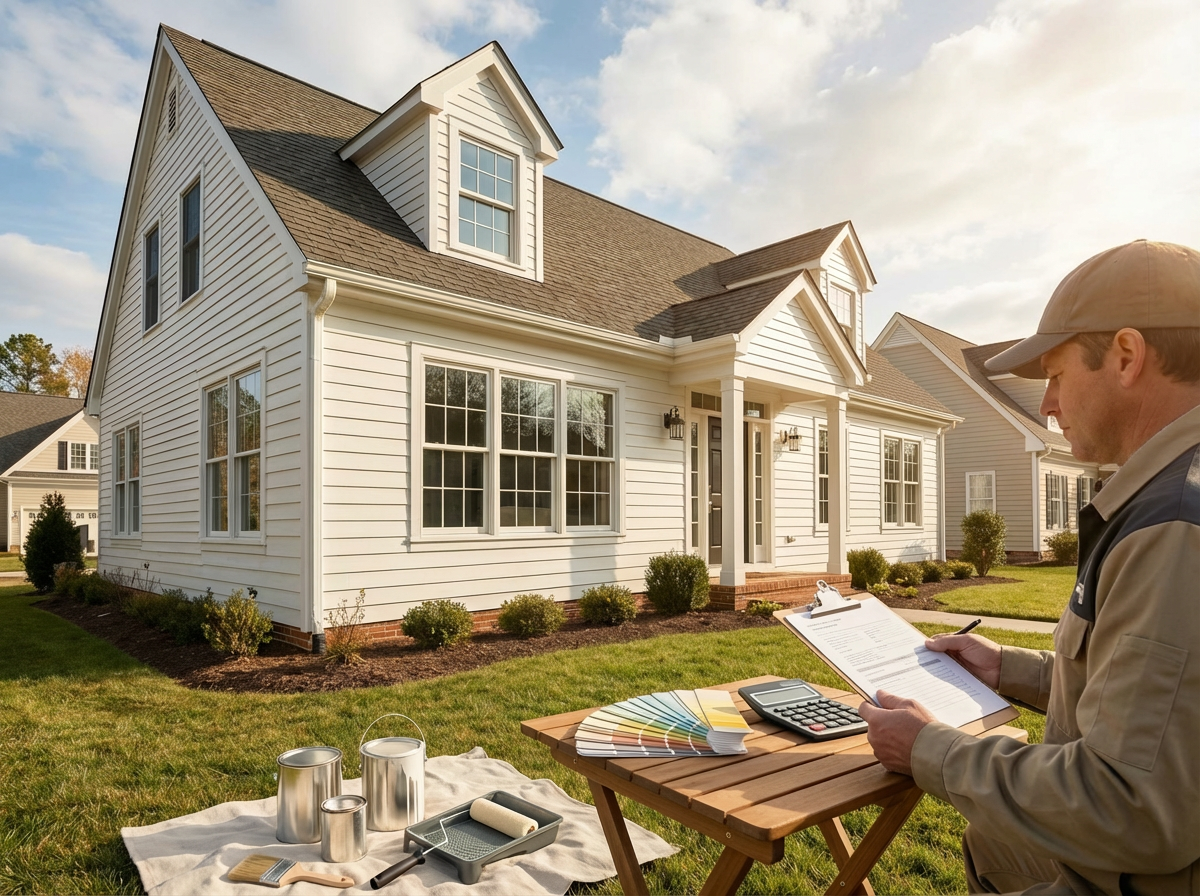
These are realistic planning ranges for Hampton Roads, including exterior house painting cost Virginia Beach, Norfolk exterior painting cost, Chesapeake house painting cost, and Suffolk exterior painting cost. Exact pricing depends on your home and the scope.
Cost Per Square Foot In Virginia And Why It Varies
Homeowners often ask for siding painting cost per square foot Virginia because it feels like a clean way to compare.
A reasonable planning range for many projects is $2.50 to $6.50 per square foot of paintable surface.
But here is why per square foot pricing can be misleading.
First, most people do not know their paintable surface area. Exterior surface area is not the same as interior living space. Second, two homes with the same surface area can have totally different prep needs. A chalky, peeling home with failing caulk can take twice the labor of a home that is clean and stable.
Heavy prep and repairs also change the effective per square foot cost. If a project needs full scraping on one elevation, rot repair around a few windows, and full priming, the labor and materials jump. That is why a detailed inspection matters more than a quick phone quote.
Table 2 Cost Differences By Siding Material
| Siding material | Typical prep needs | Best coating approach | Common pitfalls | How it affects cost |
| Vinyl | Thorough wash, mildew treatment, chalk removal, careful masking | Quality exterior acrylic designed for vinyl, proper adhesion steps | Painting too dark, skipping cleaning, trapping moisture | Often moderate cost unless there is heavy chalking or lots of masking |
| Wood | Wash, scrape, sand, repair soft spots, caulk joints, prime bare wood | Prime where needed, durable topcoat system | Painting over rot, leaving loose paint edges, poor caulk work | Can be higher due to labor and repairs, especially on older homes |
| Fiber cement | Wash, caulk seams, spot prime, address exposed edges | High quality exterior acrylic, attention to joints | Missing caulk failures, painting over dusty surfaces | Usually steady cost, prep is important but surfaces are consistent |
| Stucco | Wash, repair cracks, address chalking, possible extra material | Elastomeric or masonry appropriate coatings when needed | Underestimating paint absorption, ignoring cracks | Can be higher because stucco can require more paint and prep |
| Painted brick | Wash, check for moisture issues, spot prep failing areas | Masonry appropriate coatings, breathable where needed | Painting over moisture problems, skipping surface checks | Can be moderate, but moisture and repairs can raise cost |
If you are comparing paint vinyl siding cost Virginia, paint wood siding cost Virginia, and paint fiber cement siding cost Virginia, this table is the quick reality check. Material changes prep, and prep drives price.
Real World Virginia Examples
In real life, most homes fall into patterns. Here are a few common scenarios we see.
Scenario 1: Virginia Beach Two Story Vinyl With Coastal Exposure
A two story home near the water in Virginia Beach with vinyl siding and white trim. The siding looks fine from the street, but the north side has algae staining and the windward side has more salt air residue.
This project usually needs a strong wash, mildew treatment, careful masking, and a coating system that holds up to coastal conditions. A realistic range is $8,000 to $11,500, depending on trim detail and access.
Scenario 2: Norfolk Older Wood Siding With Peeling And Failing Caulk
A Norfolk home with older wood lap siding. Several elevations show peeling, and the caulk around windows is cracked. There are a few soft boards near a downspout.
This is a prep heavy job. Scraping and sanding take time, and wood repairs must happen before paint. Expect $9,500 to $15,500 depending on repair scope and how much full priming is needed.
Scenario 3: Chesapeake Fiber Cement In Good Condition
A Chesapeake two story home with fiber cement siding that is in decent shape. There is minor fading and a few caulk gaps, but no major peeling.
These are often efficient projects with predictable prep. Expect $7,500 to $10,500 for wash, caulk touch ups, spot priming, and two coats.
Scenario 4: Suffolk Stucco With Hairline Cracking
A Suffolk home with stucco that has small cracks and some chalking on sunny elevations.
Stucco can absorb more coating, and cracks need attention so water does not work in during storms. Depending on crack repair needs and coating choice, expect $10,000 to $17,000.
Scenario 5: Norfolk Shaded Elevation With Mildew And Algae Cleanup
A Norfolk home with mixed siding and a shaded backyard wall that stays damp after rain. Mildew and algae are visible, especially after humid weeks.
This requires proper cleaning and treatment before any paint goes on. If the rest of the home is stable, the range might be $6,500 to $9,500. If the mildew is paired with peeling or failing caulk, the range climbs.
Scenario 6: Virginia Beach Painted Brick With Moisture Checks
A Virginia Beach home with painted brick that looks mostly stable, but there are a few areas where paint is bubbling near a garden bed.
Before painting, we need to check for moisture sources and address them. If moisture is controlled and prep is moderate, expect $7,000 to $11,000. If moisture issues require repairs or more extensive prep, cost increases.
What Should Be Included In A Professional Quote
A detailed scope protects homeowners. It keeps everyone on the same page about prep, repairs, materials, and what “done” actually means. In Virginia, where humidity and storms can expose weak prep fast, a clear written scope is not paperwork. It is peace of mind.
Here is what you should see in writing.
- The quote clearly states what surfaces are included, including siding, trim, fascia, soffits, shutters, doors, and any detached structures.
- The quote explains the washing method and whether mildew and algae treatment is included.
- The quote lists the prep steps included, such as scraping, sanding, caulking, and priming, and it explains what conditions trigger additional prep.
- The quote names the coating system, including product type, sheen, and number of coats.
- The quote explains how landscaping, windows, and walkways will be protected during the work.
- The quote states how repairs are handled, including wood rot, loose boards, and damaged trim.
- The quote includes a clear timeline and explains what weather delays may do to the schedule.
- The quote includes warranty or guarantee details and how touch ups are handled at the end.
If you want to see what a professional exterior scope looks like, our exterior team follows a clear process on our Exterior House Painting page.
Ways To Keep Costs Reasonable Without Cutting Corners
There are smart ways to manage your budget without sacrificing durability.
One of the easiest is keeping the color plan simple. Fewer colors usually means fewer labor hours, and it reduces the chance of missed edges.
Timing matters too. Scheduling during more stable weather windows can reduce delays and help coatings cure properly. In Hampton Roads, spring and fall often cooperate, but we can also paint in summer when we plan around humidity and storms.
Bundling work can help. If the trim is already being painted, adding shutters or a front door can be efficient because masking and setup are already in place.
Fixing small issues early also helps. A small caulk failure or a soft board near a gutter can turn into a bigger repair if it is ignored through another storm season.
What not to cut is just as important. Do not cut prep. Do not skip primers where bare substrate is exposed. Do not accept bargain coatings that cannot handle strong sun and humidity. Those shortcuts are how homeowners end up repainting sooner than they should.
How Showstopper Painting Approaches Exterior Siding Work
We keep exterior siding projects calm and predictable, because most homeowners just want the job done right without their yard turning into a mess.
First, we walk home and talk through what you are seeing. We point out peeling areas, caulk failures, mildew zones, and any repair concerns. Then we explain what prep is needed and why.
Next, we protect what matters. Landscaping, walkways, windows, and outdoor fixtures are covered and masked as needed. We keep a clean job site and communicate daily so you know what is happening and what is next.
Prep comes before paint. We wash thoroughly, treat mildew when present, scrape and sand loose areas, and seal gaps with proper caulk. We prime where needed so the finish coats bond and hold.
Then we apply a coating system built for Virginia conditions. That means thinking about humidity, coastal exposure, and strong summer sun, not just what looks good on day one.
We also back our work with clear expectations and our guarantee, including our 100 percent money back guarantee page for homeowners who want extra peace of mind.
FAQs
How long does exterior siding paint last in Virginia?
In Virginia, exterior siding paint life depends on sun exposure, moisture, and prep quality more than anything else. On many homes in Virginia Beach, Norfolk, Chesapeake, and Suffolk, a well prepped and properly coated exterior can last around seven to twelve years on siding, with trim sometimes needing attention sooner. Coastal salt air and wind driven rain can shorten that window on the most exposed sides of the home, especially near the water. Shaded elevations that stay damp can also fail sooner if mildew is not fully treated before painting. The best way to extend life is thorough washing, solid prep, proper priming where needed, and using a durable exterior coating system that is designed for our humidity swings.
Is it cheaper to paint in winter in Virginia?
Winter can sometimes be less busy, but it is not automatically cheaper, and it is not always the best fit for every home. The bigger issue is temperature and moisture. Many exterior coatings have minimum temperature requirements and need a certain window to cure. In Hampton Roads, winter can bring damp stretches and cold nights that limit those windows. If the weather cooperates, winter painting can work on certain projects, but scheduling flexibility matters. A good contractor will be honest about whether the forecast supports a quality result, because saving a little money is not worth a coating that struggles to cure.
Can you paint vinyl siding a darker color?
Vinyl can be painted, but going darker is where homeowners need to be careful. Dark colors absorb more heat, and in strong summer sun, that heat can cause vinyl to warp. The safest approach is choosing colors that are approved for vinyl and using coatings designed for vinyl surfaces. In Virginia Beach, where sun and humidity can combine into real heat stress, we usually recommend staying close to the original shade or using vinyl safe color technology when available. The right answer depends on the specific siding and the color you want, so this is a great topic to cover during an on site evaluation.
Do you need primer for exterior siding?
Primer is not always required on every square inch, but it is required where the surface needs it. Bare wood, exposed fiber cement edges, repaired areas, and chalky or unstable surfaces often need primer so the finish coats bond properly. Spot priming is common when the siding is mostly stable but has a few exposed areas after prep. Full priming may be needed when the existing coating is worn out, porous, or failing across large sections. In our climate, primer is not just an extra step. It is one of the biggest factors in whether the finish holds up through humidity, storms, and sun.
How long does it take to paint siding on a typical Virginia home?
Most siding projects take several days, but the timeline depends on size, prep needs, and weather. A smaller one story home in good condition might take three to five working days. A two story home with moderate prep might take five to eight working days. If there is heavy scraping, repairs, or multiple colors, it can take longer. Weather can also stretch the schedule. Pop up storms, high humidity, and rain can pause work because we do not want to trap moisture under fresh coatings. During your estimate, you should get a realistic timeline that includes weather expectations.
What weather delays should we expect in Hampton Roads?
In Hampton Roads, the most common delays are rain, pop up storms, and humidity that keeps surfaces damp longer than expected. Morning dew can also slow the start time, especially on shaded elevations. Coastal winds can be a factor too, because overspray control and safety matter. The best contractors plan around these realities by watching the forecast closely, scheduling the most weather sensitive steps at the right time, and communicating clearly when a delay protects the final result.
How should we prepare our yard and driveway before painters arrive?
A little prep from the homeowner can make the project smoother. Move vehicles out of the driveway if possible, and clear space near the house for ladders and materials. If you have patio furniture, grills, or planters close to the siding, moving them a few feet away helps protect them and gives the crew room to work. If you have delicate plants, it helps to point them out during the walkthrough so protection can be planned. We also recommend keeping pets inside or in a safe area during work hours, because doors may be opened and equipment will be moving around the yard.
Will pressure washing damage siding?
Pressure washing can damage siding if it is done incorrectly, especially on older wood, loose boards, or areas with existing gaps. The goal is to clean, not to carve. A professional approach uses the right pressure, the right tip, and the right distance, and it avoids forcing water behind siding. In many cases, soft washing methods and proper detergents are the safer way to remove pollen, mildew, and grime. If a home already has failing caulk or loose edges, that should be addressed as part of the prep plan so cleaning does not create new problems.
Should we replace rotten wood before painting?
Yes, rotten wood should be repaired or replaced before painting. Paint is not a structural fix, and it will not stop rot that is already active. In fact, painting over rot can trap moisture and make the problem worse. The right approach is to identify soft areas, determine how far the damage goes, and repair them so the surface is solid and dry before priming and painting. This is also one of the best ways to avoid surprise costs. If rot is likely, your quote should explain how repairs are handled and what is included versus what is additional.
How do we know if we need full scraping or just spot prep?
The difference comes down to how well the existing coating is bonded. If paint is peeling in isolated areas and the surrounding paint is tight, spot scraping and feather sanding can be enough. If peeling is widespread, edges are lifting across large sections, or the surface is heavily chalked, full scraping or more extensive prep may be needed. A simple test is rubbing the surface with your hand. If you get a heavy chalky residue, that is a sign the surface is breaking down. Another sign is if you can lift paint edges easily with light pressure. During an on site evaluation, we look for these signs and explain the prep level needed so you know what you are paying for.
Final Cost Recap And Next Steps For Virginia Homeowners
The cost to paint siding in Virginia comes down to a few big things: how much paintable surface you have, what siding material you have, how much prep is needed, how complex the trim and color plan is, and how access and weather affect the work.
If you are trying to budget, use planning ranges. But if you want a number you can trust, get an on site evaluation with a detailed scope so prep and repairs are not vague.
If you are in Virginia Beach, Norfolk, Chesapeake, or Suffolk and you want a clear, no pressure estimate, reach out through our Contact page and we will walk your home, answer questions, and give you a straightforward plan.