
If you’re thinking about coating your garage floor, you probably have two big questions: “When can I walk on it?” and “When can I park my car on it?” Those are fair questions. Your garage isn’t just storage. It’s where you park, work out, keep your tools, and walk in and out all day long.
Here’s the part that trips people up: an epoxy floor can feel dry long before it’s actually cured. If you treat “dry” like “done,” you can end up with tire marks, scuffs, or a coating that never bonds the way it should.
In this guide, we’ll explain epoxy floor cure time in plain language, break down what “one-day” garage floor coatings really offer, and show you how we plan our installs in Virginia Beach, Norfolk, Chesapeake, Suffolk, Williamsburg, Yorktown, and Newport News.
Dry vs. Cured: Why They’re Not the Same Thing
Most homeowners use “dry” and “cured” like they mean the same thing. In the coatings world, they don’t.
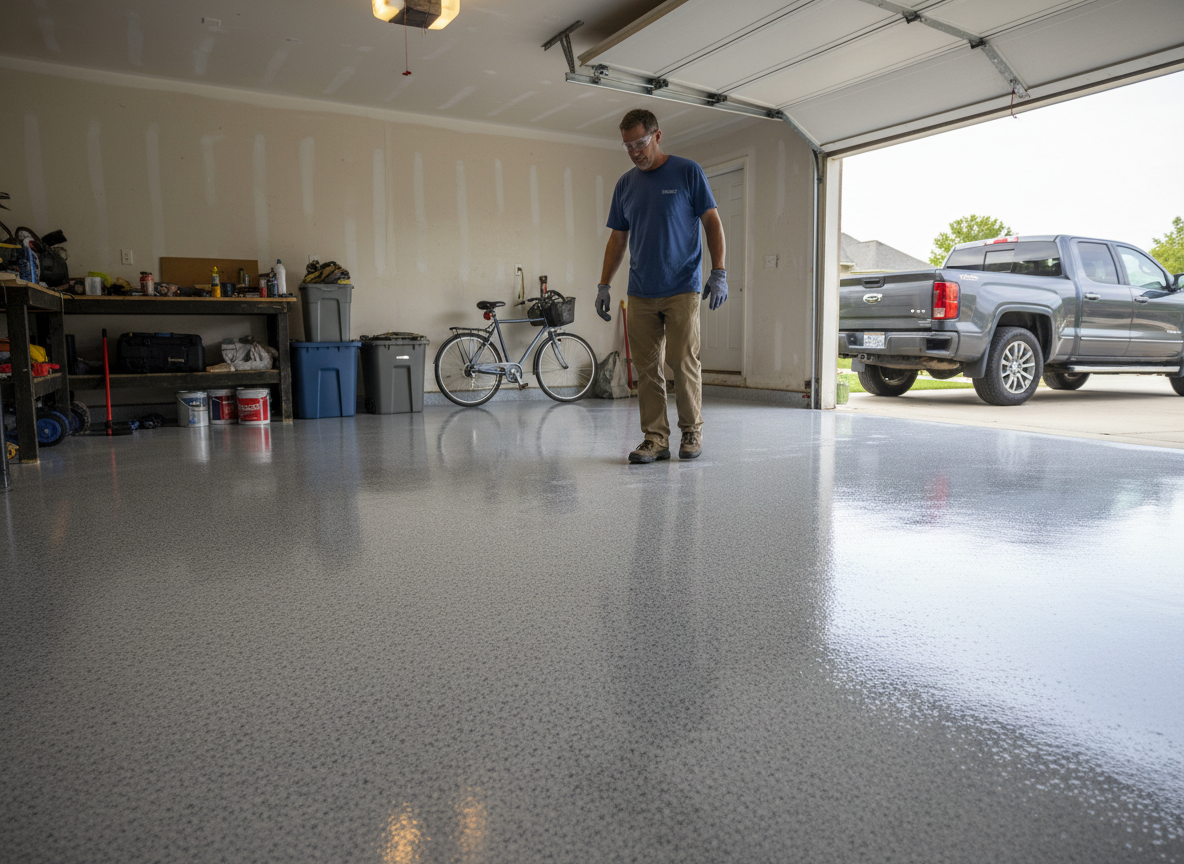
Dry means the surface has firmed up enough that it’s no longer tacky. You can touch it lightly and nothing sticks to your finger. That’s a surface-level change.
Cured means the coating has finished a chemical reaction that gives it its full strength. This is when the floor reaches the hardness and durability you paid for.
Here’s the part most homeowners miss: a floor can feel dry, look finished, and still not be ready for a car. Tires are heavy, hot, and rubbery. They press down and twist every time you turn the wheel, and that combination is hard on a coating that hasn’t fully cured yet.
A few quick things to keep in mind before we go further:
- Foot traffic and vehicle traffic need very different wait times.
- Vehicle traffic always needs the longest wait.
- “Dry to the touch” does not mean “ready for tires.”
- Humidity and temperature can stretch the timeline, especially near the coast.
The Real Timeline: Walking vs. Parking
When people ask about epoxy floor cure time, what they really want is a simple schedule they can plan their week around. The honest answer is that cure time depends on the coating system, the concrete slab, the weather, and the installer’s process. Still, we can walk you through it in practical terms.
What You Can Usually Do First: Light Foot Traffic
Light foot traffic is the earliest milestone. This is the point where you can carefully step onto the floor without leaving a mark.
That said, “light foot traffic” doesn’t mean life goes back to normal. It means:
- No dragging boxes across the floor
- No twisting your feet in place
- No rolling heavy tool chests over it
- No scraping ladders across the surface
- No pets running or sliding on it
One catch: if your garage tends to be humid, which is common in Virginia Beach and Norfolk, the coating can take longer to reach even this first safe stage.
What Takes Longer: Parking a Vehicle
If you only remember one thing from this article, make it this: vehicle traffic needs the longest wait of all.
Parking is much harder on a coating than walking. Even if the floor feels firm, tires can still:
- Leave “hot tire pickup” marks behind
- Press into the coating before it reaches full hardness
- Pull at the surface when you turn the steering wheel
Parking too early isn’t just a cosmetic risk. It can also affect how well the coating performs over the long run.
General Guidance on Epoxy Cure Time
We want to be upfront here: different coating products cure at different speeds, and we don’t want to hand you generic manufacturer numbers as if they apply to every single job. Instead, here’s a simple, honest way to think through it:
- Dry-to-touch happens first, as the surface firms up.
- Light-use readiness comes next, allowing careful foot traffic.
- Full cure comes last, bringing the best hardness and resistance.
In general, the more you ask the floor to handle, especially tires, the more cure time really matters.
A Simple Way to Plan Around Milestones
- Surface feels dry. It looks finished and isn’t tacky, but it still isn’t ready for real use.
- Careful foot traffic. Short, gentle steps only. No heavy items and no twisting.
- Normal foot traffic. More typical walking and light tasks around the garage.
- Vehicle traffic. Parking, turning the wheels, and daily driving use. This is the longest wait, and the most important one to respect.
There isn’t one universal number that fits every garage. That’s exactly why we focus on prep, process, and setting clear expectations with every homeowner.
What Changes Cure Time in Coastal Virginia
If you live in Virginia, the weather isn’t just small talk. It’s a real factor in how your coating behaves as it cures.
Humidity: Why Damp Air Slows Things Down
Humidity is simply moisture in the air, and coatings don’t cure in a vacuum. They cure in your garage, breathing your air, sitting on your slab. High humidity can:
- Slow down parts of the curing process
- Increase the chance of moisture-related issues on the slab
- Make the garage feel closed in, especially with limited airflow
This matters in Suffolk and Newport News too, especially during long stretches of rainy weather.
Temperature: Too Cool, Too Hot, or Swinging Day to Night
Temperature affects the chemical reaction behind curing. Cooler air tends to slow that reaction down, while hotter air can speed it up. Faster isn’t automatically better, though. It can shorten the installer’s working time and lead to rushed steps during application.
In Williamsburg and Yorktown, you can also see big day-to-night temperature swings depending on the season. That can change how the garage feels over a full 24-hour period.
The Slab Itself: Moisture Inside the Concrete
Concrete can hold moisture even when the surface looks completely dry, and that moisture can move upward through the slab over time. This is exactly why surface prep and moisture awareness matter so much before any coating goes down. For a deeper look at what proper prep and installation involves, see our epoxy floor installation guide.
One-Day Garage Floor Coatings: What They Are and What You Trade
Let’s talk about the marketing promise you’ve probably seen: the “one-day garage floor coating.”
Fast-cure systems really do exist. Some coatings are built to cure quickly so an installer can finish the whole job in a tight window. But here’s the honest truth: speed is always bought against something else. That something is usually one or more of the following:
- Cure window – less time for the coating to settle and strengthen
- Adhesion margin – less forgiveness if the prep work isn’t perfect
- Working time – less time for the installer to apply the coating evenly
- Long-term performance – a rushed system can wear less well over time
To be clear, we’re not saying every fast system fails. We’re saying the faster the promise, the more carefully you should ask what’s being skipped or compressed to hit that speed.
Why “One Day” Can Be Misleading
A lot of homeowners hear “one day” and assume it means installed in one day, and ready for everything the next. But installation speed and full cure are two different things. Even with fast-cure systems, you still need to respect the difference between what’s safe to walk on and what’s safe to park on. In a humid coastal area, those timelines can be even less predictable.
Our Approach: A Deliberate Two-Day Process
This is the core of how we think about garage floors. We don’t build our process around the fastest possible promise. We build it around prep, bonding, and a finished floor that can handle real life: cars, tools, turning tires, and the everyday mess of a working garage.
When we say we use a two-day process, we mean we complete the installation over two days, we’re not selling a “one-day” label, and we plan the job so no step gets rushed. That doesn’t mean the floor is at full strength the moment we pack up our tools. It means the work itself is done correctly, with time for each stage to be handled with care.
Why We Don’t Do One-Day Floors
The trouble with one-day installs is that the tight schedule can push a crew to rush through steps that actually matter. Here’s what we refuse to compromise on:
- Concrete prep, which is the foundation of good adhesion
- Cleanliness, since dust control affects the final bond
- Consistent application, for even thickness and coverage
- Realistic use guidance, so you don’t damage the floor on day two
In our experience, a garage floor coating isn’t the place to gamble on speed.
What You Get From an Unrushed Process
A deliberate process helps us deliver better bonding to the concrete, a more consistent finish, and fewer surprises for homeowners. It also means clearer expectations for exactly when you can walk on the floor and when you can park on it. From a homeowner’s perspective, that last point matters most, since most frustration comes from unclear timelines.
Comparing Common Garage Floor Coating Approaches
| Option | Install Speed | Best For | Main Tradeoff | What to Watch For |
|---|---|---|---|---|
| One-day coating (fast-cure focus) | Fast | Tight schedules | Less margin for error | Prep quality, humidity, realistic vehicle timeline |
| Two-day install (our approach) | Moderate | Homeowners who want a durable, well-planned job | Requires planning for two days of work | Scheduling vehicles, pets, and access |
| DIY kit | Varies | Very small budgets and light expectations | Prep is hard to do well | Peeling, patchy finish, early tire marks |
Homeowner Planning Guide
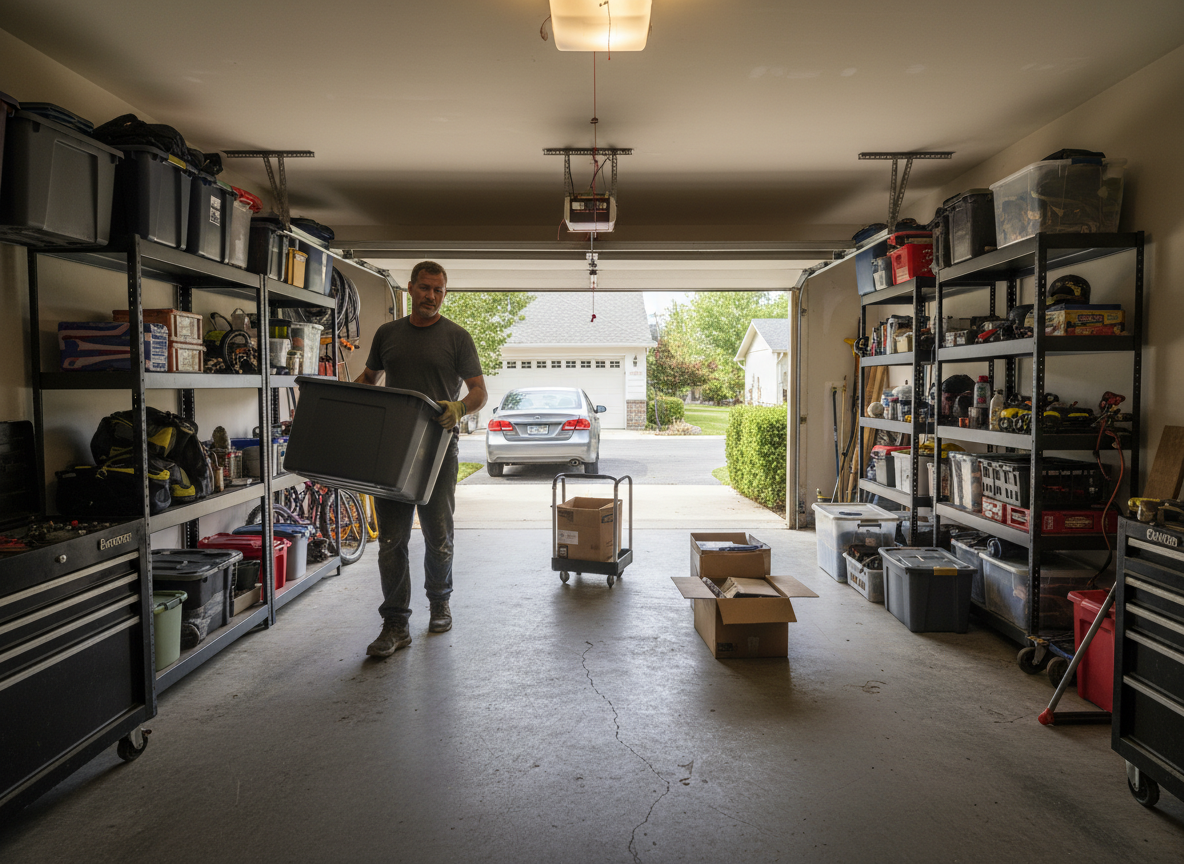
If you’re coating a garage floor, plan for it the way you’d plan any small home project. It doesn’t take much, but a little coordination goes a long way.
Before the Crew Arrives
- Move vehicles out, and decide where they’ll go for a couple of days.
- Clear the floor completely, including shelves that touch the slab.
- Set aside anything that can’t get dusty.
- Plan an alternate entry or exit if you usually come through the garage.
- Let everyone in the house know the garage is off limits for now.
During the Install
You should expect noise and dust control steps during prep, an unavailable garage for normal use, and a clear “do not enter” period right after the coating goes down.
After Installation: Avoiding Early Damage
The first few days after installation are when accidental damage tends to happen. To protect your new floor, don’t drag anything across it, and don’t roll heavy items until you’re told it’s safe. Keep pets off the floor, since their nails can scratch a fresh coating, and avoid turning your tires in place when you first start parking again. If you must park earlier than recommended, ask us about temporary protective steps; we’ll tell you what’s realistic for your situation.
Frequently Asked Questions
Plan for Reality, Not Hype
If you’re trying to plan your week, don’t worry about memorizing a single number for epoxy floor cure time. Focus on understanding the milestones, and respect the one that matters most: vehicle traffic.
If you’re in Virginia Beach, Norfolk, Chesapeake, Suffolk, Williamsburg, Yorktown, or Newport News, and you want a garage floor coating that’s planned carefully instead of rushed into a one-day promise, we’re happy to help. Request a quote and tell us how you use your garage, whether that’s parking, a home gym, a workshop, or storage. We’ll recommend a finish and give you a clear timeline so there are no surprises.