
The cost to paint a living room depends mostly on three things: how high the ceilings are, whether you’re going from a dark color to a light one, and how much prep and repair work the walls need. We don’t publish a flat living room price because those three things change the job so much from house to house. We price each room after we see it. Once ceilings pass about 12 to 14 feet, the price starts to climb.
What Sets The Price
Two living rooms of the same size can be priced very differently because of what’s on the walls now and how the room connects to the rest of the house. Walls with dings, nail holes, or old patches also take more prep, and that shows up in the quote.
How High And Vaulted Ceilings Change The Price
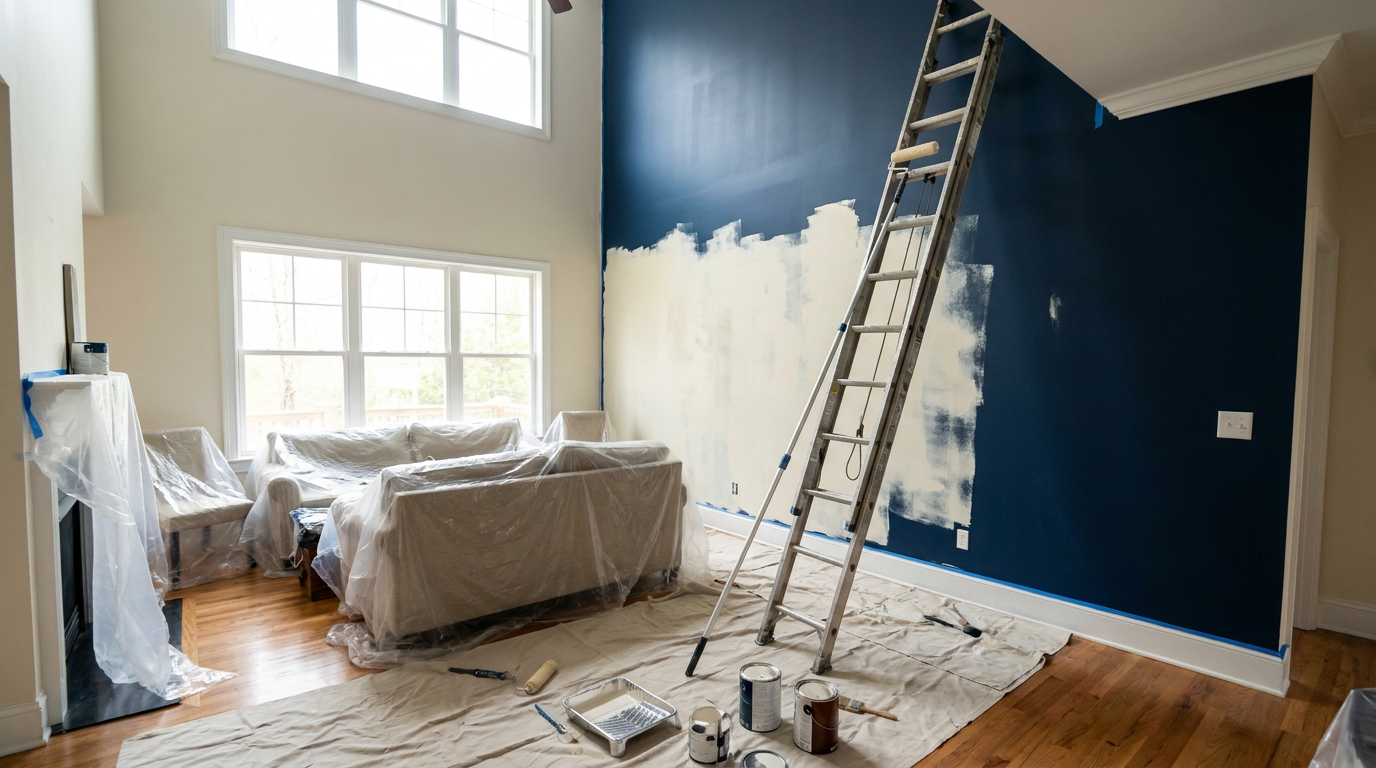
Once you pass roughly 12 to 14 feet, the work changes. Reaching the top of the wall means taller ladders or scaffolding, more setup time, and slower work at height.
That’s why a vaulted living room can cost more than a flat-ceiling room with the same floor area. If your living room has a two-story wall or a cathedral ceiling, tell us the height when you ask for a quote.
Open Floor Plans: Where Does The Living Room End?
In an open layout, the living room often runs straight into the kitchen or dining area with no wall or door between them. Painting only the living room portion can leave a visible line where one color ends in the middle of a continuous wall. A lot of people end up painting the connected space so the finish looks even. Decide this before you ask for quotes, because “just the living room” and “the whole open space” are different jobs with different prices.
When A Color Change Needs Primer Or An Extra Coat
Going from a dark color to a light one is the usual trigger for adding a primer or extra coat of paint to the job. Deep reds, navy, charcoal, and similar colors tend to show through a light topcoat. Generally, that means primer, an extra coat, or both. Going from light to dark, or between similar tones, is usually easier. It is also recommended to add primer on bare drywall, patched areas, and stained surfaces.
Protecting Furniture And Floors While You’re Living In The House
You don’t have to empty your living room before the project begins. The usual setup is that you move your furniture into the center of the room, and we cover it with plastic. Floors get protected too, so the room stays usable while the work happens around it.
Some customers prefer to move out of the room entirely. Both approaches work. Clearing the room gives painters more space and means less covering, so tell us which you’d like when you request a quote.
What A Quote For A Living Room Should Include
When you compare quotes, make sure each one answers the same questions:
- Are the ceilings and trim included, or only the walls?
- Is primer included if the color change calls for it?
- Who moves and covers the furniture?
- What happens to patching and repairs?
- Is the price for the living room only, or the connected open space too?
A quote that doesn’t say what it covers can look cheap and then grow once the work starts.
When It Makes Sense To Add More Than Walls
A living room often has a fireplace surround, built-in shelving, or cabinetry along one side. It can be cheaper to do these together than as separate jobs, since the room is already prepped and covered. If you’re thinking about built-ins or nearby cabinets, our cabinet painting page covers that work. Our interior house painting page lists what we handle inside the home, and our residential painting page shows the full range of what we do.
Is It Worth Doing Yourself?
A living room is a reasonable room for a confident DIYer with standard ceilings and a small color change. It gets harder with tall walls, a dark-to-light color change, or lots of trim to cut in around. Ladders at height are also a safety issue, not only a time issue. If your room has high ceilings or a bold existing color, that tips the balance toward hiring.
Frequently Asked Questions
What sheen should I use in the living room?
Many painters recommend a flat, matte, or eggshell finish for living room walls because they hide small flaws. Slightly shinier finishes are easier to wipe clean. Which is better depends on how much wear the room gets.
Should I paint before or after replacing furniture or flooring?
In general, paint before new flooring goes in or new furniture arrives, so there’s less to protect and less risk of damage. If you’re doing both, ask your flooring installer about their schedule.
Can I ask for a quote if I’m still deciding on colors?
Yes. Give the painter the current color and your rough target, light or dark. That’s enough to tell whether you’ll likely need primer or an extra coat.
Get a Price for Your Living Room
Showstopper Painting has been painting homes since 2006, from the southernmost point of Virginia through Hampton Roads (Norfolk, Virginia Beach, Chesapeake), up through Williamsburg, Yorktown, and into Richmond. To get a price for your living room, call 757-573-9185 or request a quote.