
Epoxy and concrete coatings can work well in basements, workshops, laundry rooms, covered patios, and some light commercial spaces. They work when the slab is sound and moisture from below is dealt with first. However, they are a poor fit for uncovered exterior slabs in full sun and weather, and for any slab with an unresolved moisture problem.
Showstopper Painting has been installing coatings since 2006, and we’ll tell you upfront where these floors perform well and where we’d recommend repairs or a different plan first.
Where Coatings Work Well Beyond a Garage
Most people searching for a basement floor epoxy coating or a patio concrete coating want a floor that’s easier to clean, tougher than bare concrete, and less likely to dust, stain, or soak up spills. Those goals are realistic in these spaces:
- Basements: storage areas, finished basements, home gyms, and utility spaces, as long as moisture is addressed first.
- Workshops and hobby rooms: better resistance to oil, solvents, and dropped tools than bare concrete.
- Laundry rooms and mudrooms: easier cleanup and better stain resistance.
- Covered patios and screened porches: easier cleaning and less dusting, though slip resistance and sunlight need to be considered.
- Light commercial floors: small warehouses, service areas, or work bays that need a cleanable, durable surface.
Each of these spaces calls for a floor that handles surface water and moisture from below, with a topcoat suited to its traffic and sunlight.
Where Coatings Are a Poor Fit
Two situations cause most long-term problems:
- Uncovered exterior slabs with heavy UV and freeze-thaw exposure. Direct sun and weather swings are hard on many coating systems. Surface prep and product choice become much more demanding, and some systems aren’t the right tool for the job.
- Any slab with an unresolved moisture problem underneath. Moisture vapor pushing up through the concrete can break the bond between coating and slab. It shows up as bubbling, peeling, or widespread delamination.
A third case is concrete in too poor a condition to coat properly. Showstopper Painting will decline some projects until the slab is properly repaired, because a coating can’t hide structural issues, failing patches, or severe surface damage. That’s a quality issue, not a sales tactic. A coating is only as good as the surface it’s bonded to.
What Matters Most in Each Space
Basements: Moisture Comes First
If you’re researching a basement floor epoxy coating, moisture is the first conversation, ahead of color, flakes, or gloss. Below-grade slabs can have moisture vapor moving up through the concrete even when the surface looks dry. That pressure interferes with adhesion and is one of the most common reasons basement coatings fail.
Our basement system starts with a moisture vapor barrier primer, followed by epoxy, then a polyurea or polyaspartic flake system.
- If you’ve seen dark spots, damp edges, or musty odors, don’t assume a coating will seal the problem in. The moisture needs to be evaluated.
- Old adhesive, paint, or contamination on the slab makes surface prep as important as the product choice.
- Cracks or damaged areas may need repair before coating.
- If a contractor skips the moisture conversation entirely, that’s a red flag.
Laundry rooms in a basement or on a slab with moisture issues fall under the same rule: moisture control comes first. Beyond that, a coating helps with detergent spills, rust stains from appliances, and general cleanup.
Patios and Covered Outdoor Areas: Slip Resistance and UV
Two things matter most on a patio. One is slip resistance when the surface is wet, from blown-in rain, pool traffic, or wet shoes. The other is UV stability, because even a covered patio can get a lot of indirect sun. If the patio works like an entryway, traction matters more than it would in a garage.
Our patio system is a polyurea base with a UV-stable polyaspartic top coat.
Workshops and Shop Floors: Chemicals and Impact
Shop floors face oil, grease, and chemical drips, abrasion from dragging equipment, point impacts from dropped tools, and tire traffic from mowers, ATVs, or small equipment.
For shop floors we use an epoxy basecoat with a polyaspartic topcoat. The base layer handles build and bond, and the topcoat handles wear and easier cleanup. Think about how you actually use the space. A woodworking shop has different needs than an automotive bay, and the more chemical exposure you expect, the more it matters that the system resists staining and softening.
Light Commercial Floors
We take on light commercial projects alongside our residential work, and the same principles apply. The advice here is straightforward:
- Prep and substrate conditions matter more than marketing claims.
- Plan for traffic. Most manufacturers distinguish between “dry to the touch” and “cured enough for heavy use.”
- Talk about chemical exposure upfront, including cleaners, oils, and solvents.
If you own a business, we’ll ask you to describe what the floor sees in a normal week: foot traffic, carts, vehicles, and cleaning routines.
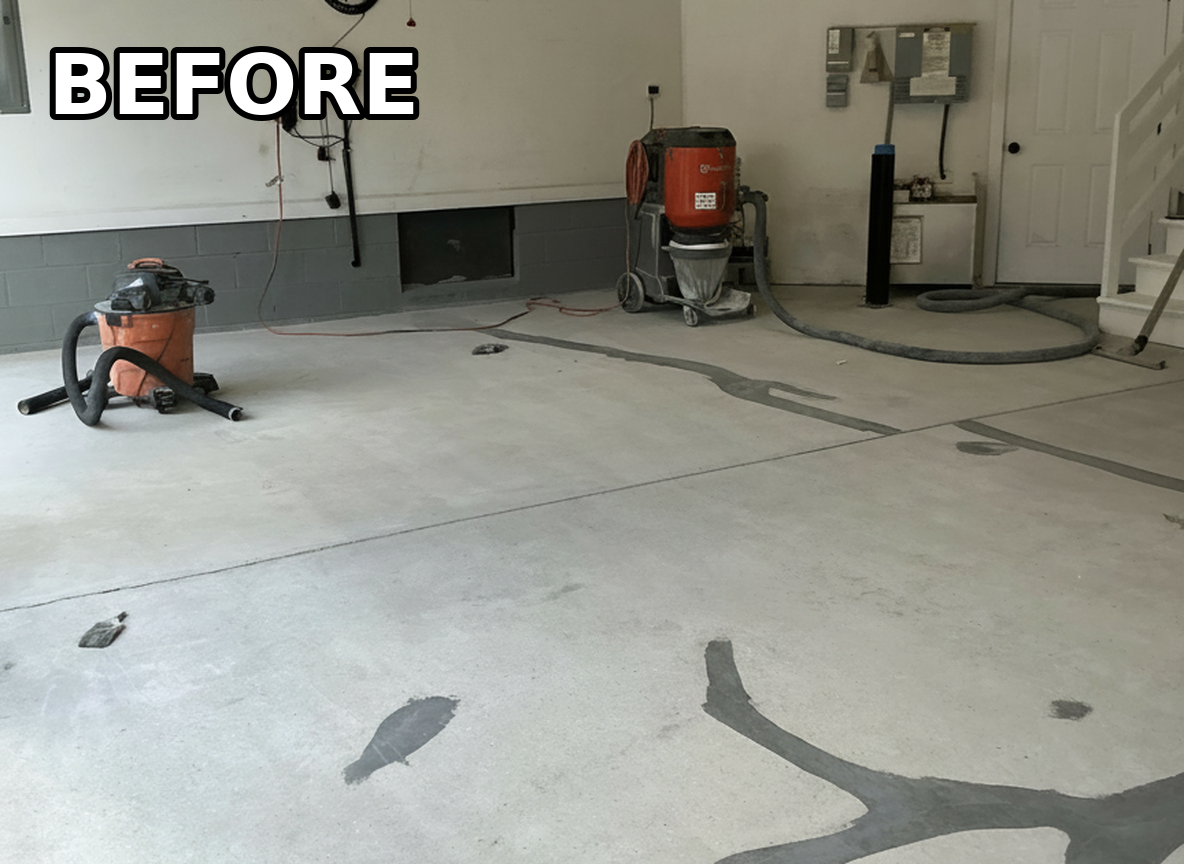
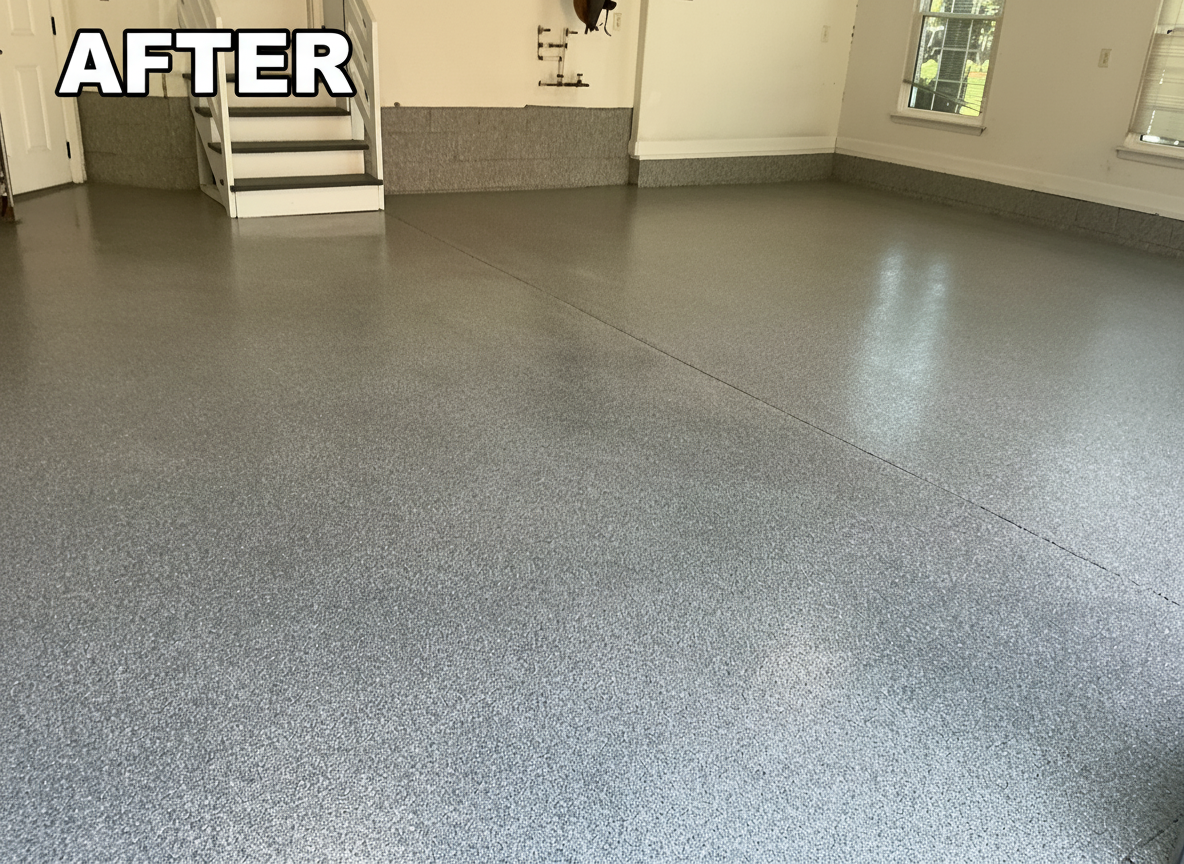
A Recent Job: Epoxy Garage Floor in Chesapeake, VA
We just finished an epoxy garage floor in Chesapeake, VA, and the client was very happy with the result.
Questions to Ask Before You Coat Any Slab
- What’s the moisture situation, especially in a basement?
- What prep method will be used?
- What topcoat is being used, and why? UV stability and wear resistance should match the space.
- What condition is the concrete in? If repairs are needed, are they included or handled separately?
- How will slip resistance be handled, particularly on patios and entry areas?
For how installs are typically sequenced, see our page on the steps involved in an epoxy floor install.
FAQ
Can you coat a basement floor that’s ever been damp?
Sometimes, but the moisture issue has to be addressed first.
Are patio coatings the same as garage epoxy?
Not usually. Patios need more attention to UV stability and slip resistance.
What if my concrete is cracked or in rough shape?
A coating can’t fix a failing slab. Some floors need to be repaired first, and a good contractor will tell you that upfront.
What does a flake epoxy floor cost?
Showstopper Painting’s flake epoxy floor starts at $9/sq ft. Final pricing depends on slab condition, prep needs, size, and the system chosen for the space.
Get a Quote
If you’re considering a basement floor epoxy coating, a patio concrete coating, or a shop floor system, call 757-798-8649 or request a quote through Showstopper Painting.